



ECOS 2000
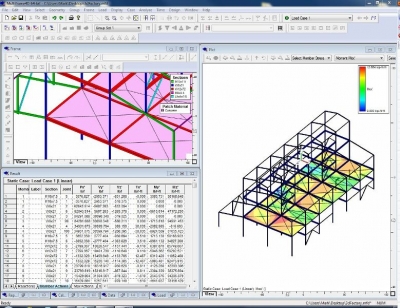
The Greek Reinforced Concrete Code – 2000 edition (EKOS 2000) is a thorough revision of the code which, with improvements made in 1995, has essentially been in force since 1991.
It is, of course, common practice worldwide for building regulations to be revised at regular intervals based on experience gained from their practical application and advances in science.
In this case, in addition to the above, there were more specific reasons that necessitated a substantial revision of the reinforced concrete code.
Specifically:
– EKOS had to be adapted in terms of the multitude of anti-seismic provisions it contains, in accordance with the recently approved Greek Anti-Seismic Regulation – 2000 edition (EAK 2000).
– With regard to the materials used in reinforced concrete structures, EKOS had to adapt to the corresponding regulations on materials, which were approved in recent years and in particular to the Concrete Technology Regulation (KTS-1997) and the Concrete Reinforcement Steel Technology Regulation (KTX-2000).
– As part of the finalization of the European Structural Regulations (Eurocodes), significant changes are being made to the original Eurocode texts, on which NEKOS was largely based. EKOS 2000 had to be adapted to these changes.
Following this, all chapters of the previous regulation have been revised in EKOS 2000, both those concerning materials and those concerning calculations and construction provisions. In particular, with regard to materials, and mainly steel, specific requirements directly related to seismic behavior have been introduced.
As far as calculations are concerned, the main modifications relate to the treatment of shear under seismic stress conditions and cracking.
However, construction regulations have also become specific and demanding, especially with regard to seismic resistance, resulting in an almost unanimous increase in the use of seismic walls. This issue of EKOS 2000, along with the accompanying comments, is published by the Organization for Earthquake Planning & Protection (OASP) and the Association of Civil Engineers of Greece (ACEG) as part of a joint effort to keep Greeks informed about earthquake safety. Protection Agency (OASP) and the Association of Civil Engineers of Greece (SPME) as part of a joint effort to keep Greek civil engineers informed on issues related to the seismic safety of structures.
In order to contribute to strengthening the country’s earthquake defense, while also supporting and highlighting the important scientific, social, and productive work of Greek civil engineers, is collaborating with the OASP on a broad program of joint activities that includes:
– The processing, publication, and free distribution to civil engineers of EAK 2000 and EKOS 2000.
– The drafting and publication of up-to-date and reliable technical manuals with examples of how to apply the regulations.
– Organizing informational and educational seminars and workshops throughout Greece.
– The preparation and co-organization of the 2nd Conference “EARTHQUAKES” & CONSTRUCTIONS”.
– The establishment and training of special volunteer teams of civil engineers who will staff rescue crews in the event of an earthquake.
– Online information via the internet on regulations and earthquake-resistant technology.
This issue was edited by the SPME, and the production and printing costs were covered by the OASP.
June 2001
THE PRESIDENT OF O.A.S.P. THE PRESIDENT OF S.P.M.E.
VAS. ANDRIANAKIS VAS.OIKONOMOPOULOS