



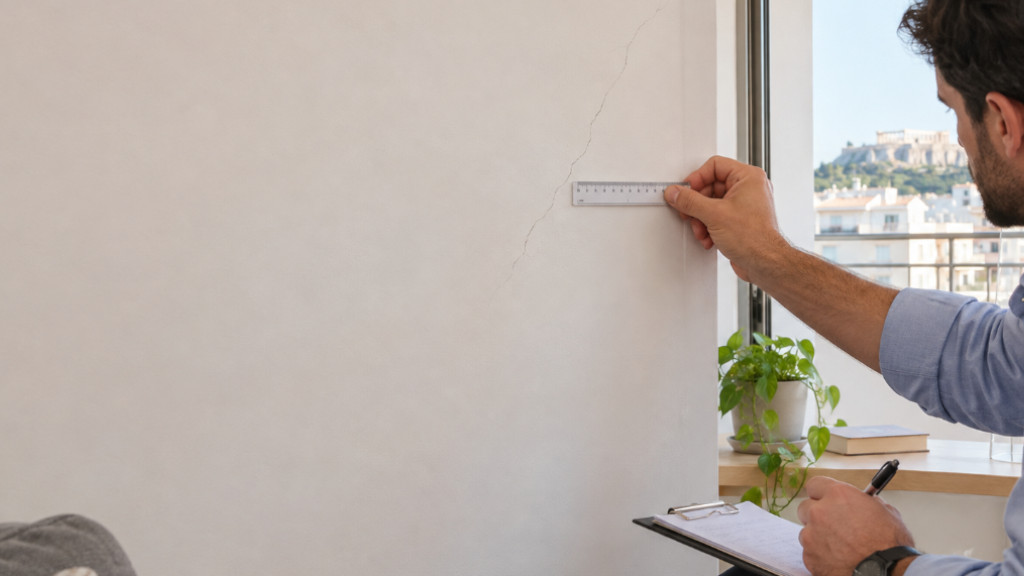
A crack in the wall doesn’t always mean there’s a serious problem. It may be related to the plaster or to the movement and contraction of the materials. In other cases, however, it may be linked to broader damage to the building. The cause cannot be reliably determined based solely on a photograph or the width of the crack.
To document the crack initially, take a photo of it and note its location and when you first noticed it. Monitor whether it changes or if new cracks appear. Notify an engineer if you notice any changes, deformations, or difficulty operating doors and windows. The OASP recommends seeking the opinion of a specialist regarding damage such as cracks.
The assessment begins with an on-site inspection and documentation of the findings. Depending on the condition of the building, the engineer may recommend further investigation or monitoring. There is no one-size-fits-all repair for all cracks: first, the cause must be assessed, and then the appropriate remedy must be selected.
Do not cover up a crack before it has been documented and assessed, if you notice that it is getting worse or if it concerns you. A technical inspection helps determine what is happening and what action is needed.
This post provides general information and is not a substitute for an on-site inspection and an engineer’s assessment.
The source article includes generalizations about the extent of cracks and possible causes. I did not present them as rules, because the assessment depends on the specific building and requires a technical inspection.