



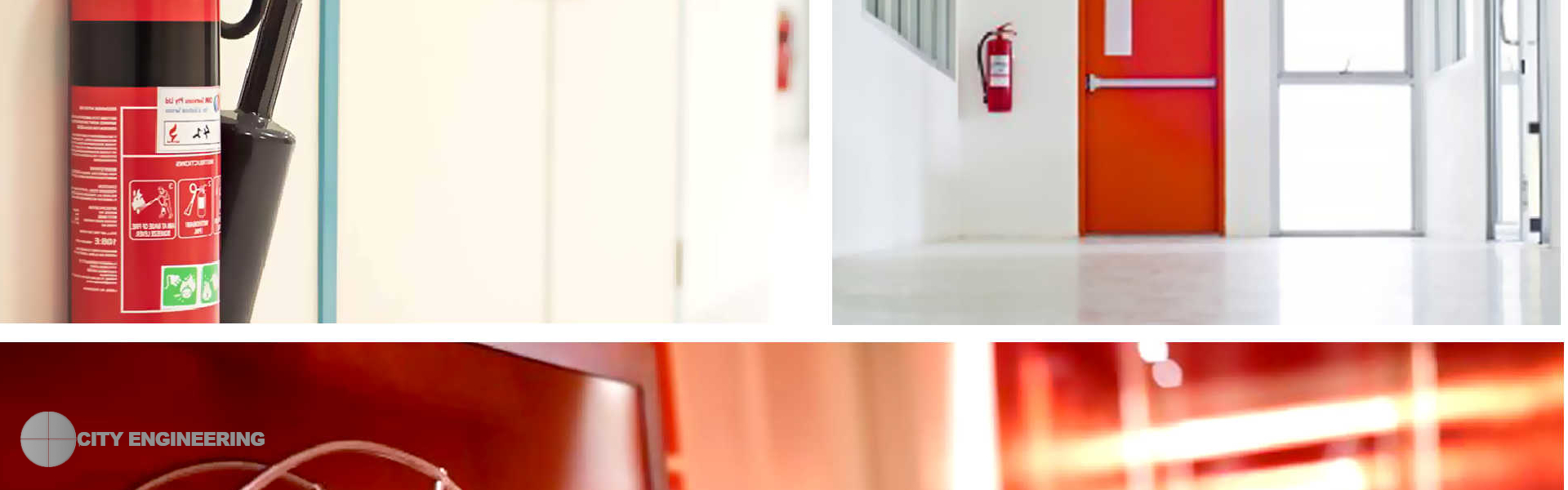
FIRE SAFETY - FIRE PROTECTION
There are many dangers that lurk in a workplace workplace. The only certainty is that with the right prevention and behavior, we reduce the chances of any accident that may occur arise. As written after all by Plutarch, the great ancient Greek historian, nothing depends on fortune but everything depends on sound judgment of the person who makes the choice of the course of his life and his fate from the right judgment and foresight.
CITY ENGINEERING has many years of experience in the preparation of Fire Safety Studies and fire protection for the issuance of the Fire Safety Certificate for your our business by the competent
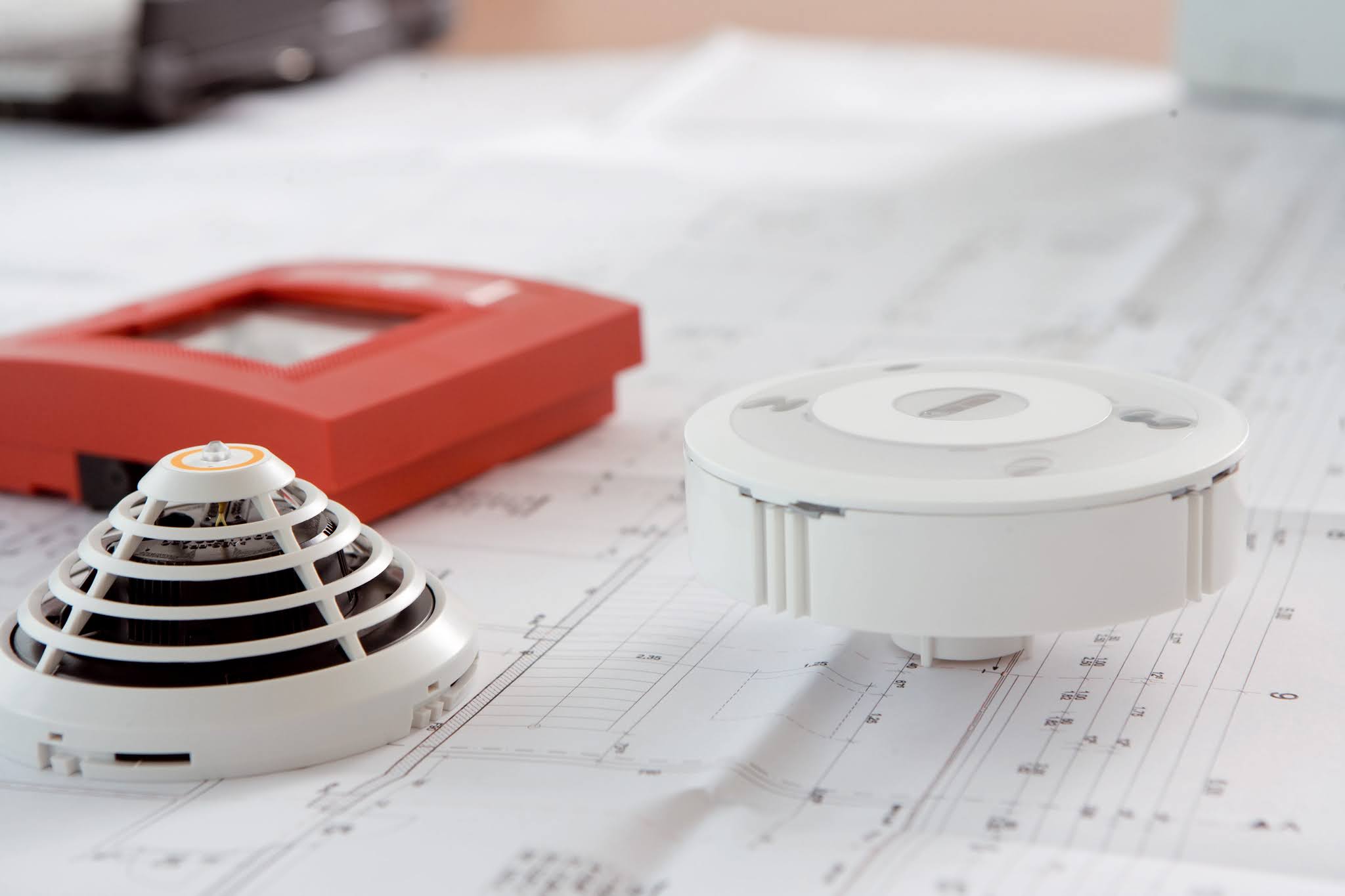
Let’s not forget that the cost of prevention is always less than the consequences of a fire breaking out on our premises.
In general, fire safety also means protecting the owner’s property and should not be treated as a compulsory and formal procedure. On the contrary, preventive measures through the study and organization of the space offer harmony and peace of mind in the owner’s daily life.
Read below everything you need to know about fire safety and fire protection for your home and your business in Greece and abroad in the field of fire safety and fire protection of your building.
WHAT SHOULD YOU KNOW ABOUT FIRE SAFETY & FIRE PROTECTION?
Fire safety is the set of measures and actions taken to protect, eliminate, or minimize the risk of fire. In the event of a fire, it is the shield for reducing the risks and damage that it can cause to people and property.
The Fire Safety Study is prepared by a competent engineer, submitted to the Fire Department for approval, and then leads to the issuance of the Fire Safety Certificate. The modernization that is slowly reaching our country now allows, as of December 20, engineers to submit the study electronically through the licensing system e–adeies.gr.
With simple words, the Studies and the Certificates of Active Fire Protection are submitted, issued and archived electronically.
The following types of applications have been incorporated into the electronic system:
- Approval of fire protection study (active)
- Archiving of fire protection study (active)
- Certificate of (active) fire protection
- Posting of printed approved/certified fire protection study (active)
- Update on approval of fire protection study (active)
- Update of fire protection study (active) filing
The Fire Safety Certificate is required for a number of business licenses and is valid for a specific period of time depending on the business. Once its validity period has expired, for the continued safety and protection of people and facilities, a new study must be conducted in order to renew the corresponding Certificate.
Fire safety studies are divided into Active Studies and Studies Passive Fire Protection Studies.
Active Fire Protection Studies concern preventive and suppressive measures that must be installed for the timely response to a fire and are approved by the local offices of the Fire Department.
Passive Fire Protection Studies concern the building/structural requirements of each property, such as buildings and facilities. This study will enable the appropriate measures to be taken to eliminate the risk of fire or limit its spread, and therefore the damage it causes.
- Arrangement of spaces for the containment of fire.
- The assurance of escape routes and exits and risk.
- The ensuring access of the Fire Department Service in the event that it is necessary to extinguish a fire.
- The use of fire-resistant materials for the structural elements of the building.
Regulation Fire protection Real estate within or nearby forest areas.
The competent ministries of Environment and Energy, Interior, and Climate Crisis and Civil Protection proceeded with the issuance of the Regulation on Fire Protection of Properties within or near forest areas.
Field of application
The provisions of the regulation apply to real estate that:
are located in forests, woodlands, and grasslands
are located in all or in part within a radius of three hundred (300) meters from the boundaries of the areas of the above case a.
are located within the suburban greenery and in declared forestation or reforestation areas.
are located within a radius of three hundred (300) meters from the boundaries of the areas of the above case c.
are located within in parks and groves of cities and residential areas.
Undeveloped properties, cultivated land, and pastures governed by the 9th Firefighting Provision (Government Gazette 1923/B/2021) are excluded from the scope of this provision.
Purpose
The regulation aims to establish a uniform and mandatory framework of fire protection measures and means for properties located within or near forests and forest areas. It specifies preventive fire protection measures as well as minimum requirements for passive and active fire protection, both for buildings, newly constructed and existing, as well as for their surrounding area, in order to enhance the fire safety of the property, reduce its vulnerability to fire, and limit its contribution to the spread of fire. At the same time, the above measures and means protect the natural environment, but above all the life and health of the public.
The regulation also addresses issues of protection and resilience of real estate in forest fires and does not concern actions and measures for fire protection in common areas of settlements. Furthermore, it does not concern the operational implementation of plans relating to the safe evacuation of areas and, in general, the response to emergency situations.
Finally, the regulation does not treat the interior of the building in the light of building fire protection regulations, but is self-contained and introduces additional requirements:
for the surrounding area of the property and the elements that constitute it (paving uncovered, planting, landscaping, outdoor structures, etc.)
for the elements that make up the shell of the building (external walls, roofs, frames, etc.) to which additional measures are imposed for the reinforcement of fire protection them.
The measures introduced by the regulation apply in addition to the requirements of the applicable regulation on fire protection of buildings and fire protection of buildings and the firefighting provisions
The requirements of the Fire Protection Regulation for Properties Within or Near Forest Areas apply in parallel with the requirements of other specific regulations governing the safety and functionality of structures or their facilities (e.g., earthquake protection, energy efficiency, lightning protection, accessibility, etc.).
What does the new fire protection regulation concern?
The regulation aims to establish a uniform and mandatory application framework measures and means of fire protection for the properties that are located within or nearby forests and forestry areas. It specifies measures for preventive fire protection as well as and minimum requirements for passive and active fire protection, both for the buildings, newly constructed and existing, as well as for the surrounding area of their, in order to to strengthen the degree of fire safety of the property, to reduce its vulnerability to fire and a64> to limit its contribution to the spread of it.
Which properties (plot of land or site together with the building within it) does the application of the new provision apply?
This concerns the properties that have buildings and are located:
in forests or forest ecosystems or forest areas
on grassland areas located on semi-mountainous, mountainous, and uneven terrain, whether public or recognized as private.
on lowland grasslands (not mountainous or semi-mountainous and not located on uneven terrain)
are located wholly or partly within a radius of 300 meters from the boundaries of forest areas
are located within the suburban green and in declared forestation or reforestation areas
are located in parks and groves in cities and residential areas.
How can I find out if my property is located in a dangerous area?
You should consult an engineer to locate your property on the forest map and then examine whether there is an obligation to prepare a fire protection study.
What must be done by the owner of the property that falls under the regulation?
He/she must contact immediately a competent engineer/ competent technical scientist who will examine the property with the building and in continuation will draft Form Assessment Risk and Technical Report.
What does the report prepared by the engineer include?
Following an on-site inspection, the engineer/technical scientist examines the risk criteria for the property and completes the risk assessment form, which determines its classification.
In continuation drafts report in which includes in any case the following:
Description of the property, the building, its facilities, and the surrounding area, with reference to the data documenting the selection of criteria for classifying the property in terms of its risk and the fire protection measures applied (the location of the property in relation to forest areas and neighboring buildings, geometric characteristics, building materials, vegetation, etc.).
Required preventive measures, passive fire protection measures, and active fire protection measures.
A floor plan of the property showing the necessary details, such as the locations of main and auxiliary buildings, access to the property, protection zones, the locations and distances of trees, the distances of neighboring buildings, etc.
What applies to existing buildings?
In the case of properties with existing buildings, the technical report shall also list the actions and works that need to be carried out.
The proposed measures are preventive, passive, and active (suppressive) fire protection and should be applied in their entirety to new buildings, while for existing buildings it is provided that:
a) The risk assessment form and the report of the competent technical scientist with accompanying data shall be submitted by an authorized administrator by March 31, 2024. The property owner must, within one month of the above date and for each subsequent year until April 30, 2024, must submit a fire safety measures implementation statement declaring that they have taken all necessary actions and meet the requirements of the regulation for the protection of their property in the event of a fire, as specified in the report of the competent technical scientist.
b) Preventive fire protection measures are mandatory starting this fire season.
c) Passive and active fire protection measures must be implemented by March 31, 2025, for properties classified as high and very high risk, and by March 31, 2026, for properties classified as low or medium risk.
Where does the owner submit the required documents?
After the Technical Report has been drafted, the property owner is required, within one month of the above date and, in any case, by 30/4/ 2024, to submit a Declaration of Implementation of Fire Safety Measures, in which they declare that the measures provided for in the report of the competent technical scientist have been properly implemented, based on the provisions of the regulation for the protection of their property in the event of a fire fire.
Until the special electronic platform is operational, on which the Risk Assessment Form, the Report of the competent technical scientist and the Declaration of Implementation of fire safety measures by the owner, the above information shall be submitted in duplicate in printed form to the relevant Municipality.
I have a fire safety file for my building in my building permit. Why is a new study necessary?
This regulation specifies fire protection measures and minimum requirements for passive and active fire protection, both for buildings, newly constructed and existing, as well as for their surrounding area, in order to reduce their vulnerability to fire and limit their contribution to its spread.
The measures introduced by the regulation apply in addition to the requirements of the relevant building fire protection regulation and firefighting provisions for preventive fire protection and prevail if they are more stringent.
Furthermore, the requirements of this regulation apply in parallel with the requirements of other specific regulations governing the safety and functionality of structures or their installations (e.g., earthquake protection, energy efficiency, lightning protection, accessibility, etc.).
What basic measures should be in place?
Preventive fire protection measures include, among others:
access to the property, the creation of a protection zone with a minimum width of ten meters on three levels in order to slow down the spread of fire and allow firefighters to intervene.
At the same time it is specified that it is prohibited to store combustible or flammable materials and objects, the storage of firewood near the buildings and the storage of flammable materials, such as fuel for gardening equipment etc.
For the existing buildings, however, it will continue to be permitted by way of exception the maintenance legally installed existing above-ground tanks for gas fuels until December 31, 2030. In addition it is mandatory to regularly clean the courtyards, the roof and the gutters from debris and residues of vegetation.
The owners of each property in areas these will have to proceed with the preparation of a plan for preparing evacuation in the event of a fire fire.
Fencing is also mandatory for existing buildings.
It is also mandatory to replace or add metal fiber mesh to the building’s window frames for high-risk and particularly high-risk properties.
In the event of renovation, it is also mandatory to invest in the building with non-combustible materials. a8> building with non-combustible materials (e.g. plaster, brick, stone, etc.).
Who monitors compliance with fire safety measures ?
Compliance with the requirements of the regulation is checked following an on-site inspection by a three-member committee appointed by the relevant municipality and consisting of a forester or agronomist, an engineer, and another employee of the municipality’s Civil Protection Department.
What are the penalties for those who do not comply?
In the event of non-compliance with the requirements of the regulation, administrative and criminal penalties are imposed on property owners. Administrative fines constitute revenue for the relevant municipality.
How can I find out if my property is located in a hazardous area?
You will need to contact an engineer to locate the to locate your property on the forestry map and to examine in continue if there is an obligation to prepare a study on fire protection.
Which cases of real estate does this concern?
Those who are in:
forests or forest ecosystems or forest areas, grassland areas that are located on semi-mountainous, mountainous and uneven terrain, whether they are public or they are recognized as a private, lowland grassland areas (not mountainous or semi-mountainous and not located on uneven terrain), in all or in part within a radius of 300 meters from the boundaries of forest areas extensions, peri-urban green and in declared forestation or reforestation areas, parks and groves of cities and residential areas.
What must be done by the owner of the property that falls under the regulation?
You should immediately contact an engineer/qualified technical scientist, who will inspect the property and the building and then draw up a Risk Assessment Form and Technical Report.
What will the engineer’s report include?
Following an inspection, the engineer/technical scientist examines the risk criteria for the property and completes the risk assessment form, which determines its classification. He then draws up a report that must include the following:
Description of the property, the building, its facilities, and the surrounding area, with reference to the data documenting the selection of criteria for classifying the property in terms of its risk and the fire protection measures applied (the location of the property in relation to forest areas and neighboring buildings, geometric characteristics, building materials, vegetation, etc.).
Required preventive measures, passive fire protection measures, and active fire protection measures.
Plan floor plan of the property where will be recorded the necessary information, such as indicatively the locations of the buildings main and auxiliary use, access to the property, the zones of protection, the positions and distances of the trees, the distances of neighboring buildings etc.
Where does the owner submit the required documents?
Until the operation of the special electronic platform in which will be registered the Form for the Assessment of the risk, the Report of the competent technical scientist and the Declaration Implementation of the measures fire safety of the owner, the above information shall be submitted in a duplicate in printed form to the relevant municipality.
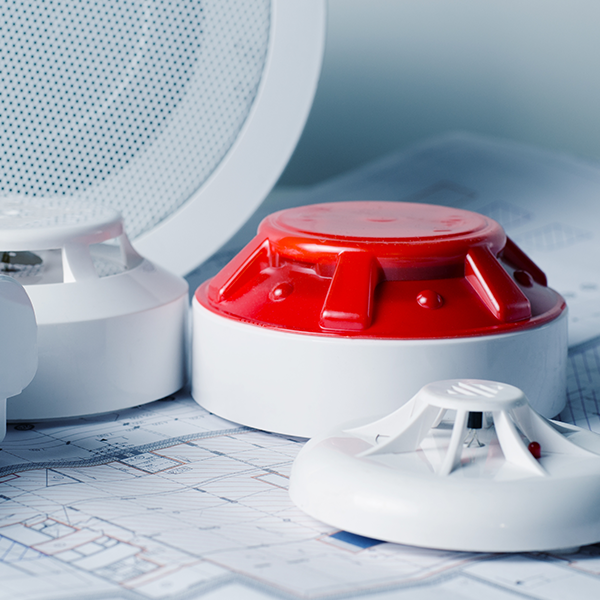
At CITY ENGINEERING we help you to develop solutions both for existing buildings as well as for new constructions, in order to ensure that the building or the plan yours complies with the legislative standards.
Call us at telephone number 210 – 9801980
We provide Fire Safety Studies Fire Safety, conduct inspections on this or in regular basis, as well as and undertake the issuance of the relevant certifications.
Our company adapts and offers solutions that coincide with both our client’s unique objectives and the objectives of the building code, in order to ensure the fire safety of buildings, those who live or work in them, as well as firefighters.
THE STUDIES FIRE SAFETY OF CITY ENGINEERING
Our company offers civil engineers and architects the freedom of design aesthetics, greater functionality, and the opportunity to unlock the value of the project.
It allows fire safety upgrades for existing and new buildings, always with the owner’s consent, using new and adapted technologies.
It preserves cultural heritage features by developing solutions that bring the building into compliance with existing restrictions and materials.
Call us at telephone number 210 – 9801980
WHAT WE BELIEVE
Our core expertise lies in finding innovative yet feasible fire safety solutions for all types of buildings, structures, and projects. Our goal is to always offer the best possible approach, while reducing unnecessary costs and minimizing future maintenance requirements.
At CITY ENGINEERING we believe in:
- Creation of solutions
- Thinking differently
- Development of innovative services
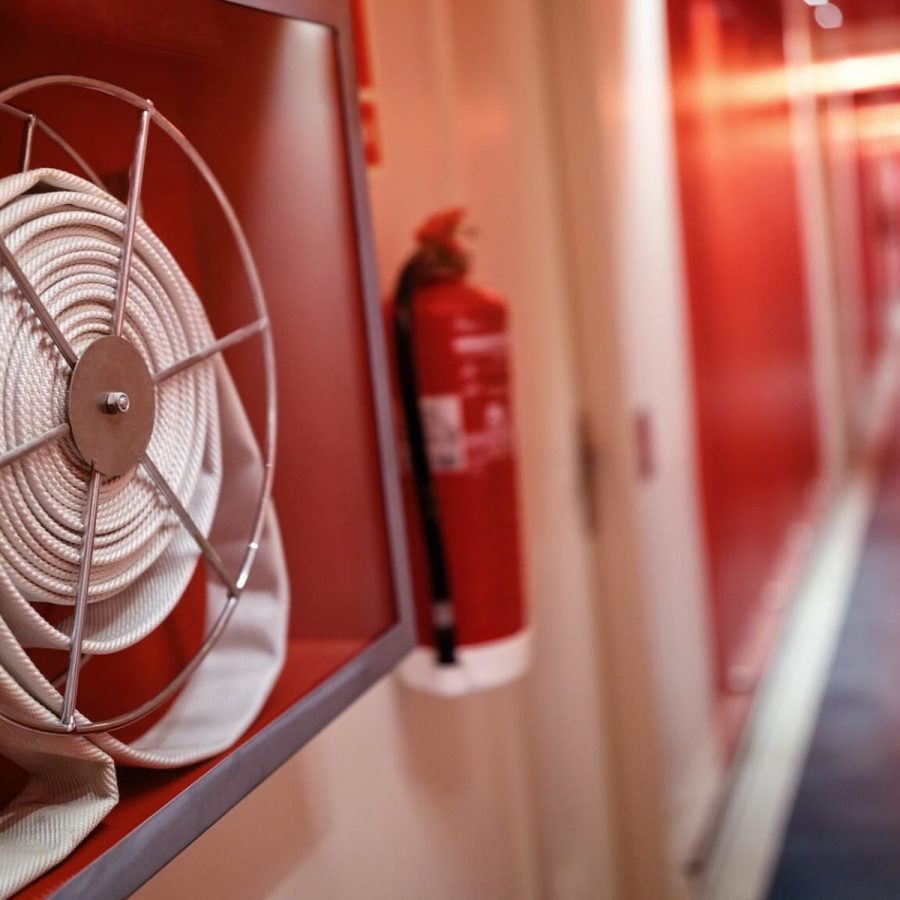
CITY ENGINEERING’s engineers have many years of experience in a wide range of projects and are committed to developing solutions to improve the project, regardless of its size.
The services Study Fire Safety of CITY ENGINEERING include:
- Preparation and execution of all types of Fire Safety Studies and all the actions for the issuance of a Fire Safety Certificate .
- Specification for firefighting proposals and solutions always in compliance with the performance requirements of the General Building Code.
- Taking measures and means of fire protection and fire safety measures for high-risk areas areas.
- Study – installation of simple firefighting networks water with firefighting hoses.
- Installation of permanent and portable fire safety measures and equipment and fire protection fire protection, maintenance and fire safety protection, maintenance and guarantee of proper operation.
- Study and installation of firefighting, automatic firefighting networks extinguishing with firefighting nests and automatic pumping firefighting systems, automatic
- Study and installation of water supply firefighting networks for extinguishing total sprinklers with sprinklers and automatic pumping firefighting systems.
- Study – implementation of a local system for bubbles
- Heat radiation calculations
- Modeling of behavior of fire
- Calculations management smoke and systems management
- Modeling and strategies for evacuation.
- Safety analysis for residents or those working in the relevant buildings
- Computational fluid dynamics and smoke movement modeling
Call us at telephone number 210 – 9801980
CHOOSE CITY ENGINEERING FOR FIRE SAFETY
- Residential
- Offices
- Factories
- Hotels
- Cafés
- Cinemas
- Schools
- Apartment buildings
- Car repair shops
- Hotels
- Tutoring
- Daycare centers
- Warehouses
- Industries
- Public gathering areas
- Craft industry facilities
- Laboratories
- Stores
- Spaces gathering public
- Health-related stores
- Restaurants
- Coffee shops
- Taverns
- Grill houses
- Entertainment centers Entertainment
- Sports facilities
- Event halls, catering, etc.
EXISTING BUILDINGS
We conduct Fire Safety Studies ensuring that all basic fire safety measures have been complied with in any private, public, or commercial building. We inspect, evaluate all measures, and confirm that you comply with the required standards.
We prepare the file for the submission of the necessary supporting documents to the Fire Department and following implementation of the measures by you, we continue to submit the file for the acquisition Certificate Fire Safety.
We provide studies on fire safety in commercial buildings, including older buildings that will need to undergo a new fire safety assessment or upgrade.
We assess whether your building complies with fire safety principles and that all relevant regulations are met.
NEW BUILDINGS
We provide the necessary studies and assessments for buildings under construction, while also monitoring the progress of the project. We also advise your building contractors on the latest fire safety methods and procedures, as required.
This helps to avoid any future delays and potential costs that may be overlooked during the construction phase.
WHAT ARE THE RISK CATEGORIES FOR BUILDINGS?
This includes:
- Public gathering places with a theoretical population (as calculated on the basis of the fire safety legislation in force in each case) of less than or equal to 150 people who do not use LPG for their operational needs (bottles or tanks).
- Shops (food retail or service shops) with an area of less than or equal to 1,000 square meters.
- Ceremony offices
The operators of activities falling under category A and housed in existing buildings (building permit prior to 02/1989) are exempt from the obligation to prepare an active fire protection study – floor plans and a summary study on LPG storage. An exception is made in cases where compliance with the terms of the provisions is impossible and deviations are requested. In such cases, the procedure for appointing a first-level deviation committee is followed, and a certified floor plan is obtained from the fire department, along with technical descriptions of permanent fire protection systems, if required.
In new buildings (building permit after 02/1989), the obligation to prepare and submit a passive and/or active fire protection study where required remains in force, in accordance with the provisions of Article 15 of Presidential Decree 71/1988 (Government Gazette 32A) as currently in force.
Operators of activities falling under category A are exempt from the obligation to obtain a fire protection certificate (active), but must comply with and maintain the fire protection measures and means required by current legislation, which shall be recorded in floor plans kept in a file at the business.
This includes:
- Public gathering places with a theoretical population (as calculated based on the firefighting legislation in force in each case) greater than 150 people, as well as public gathering places regardless of capacity that use liquefied petroleum gas for their operational needs (bottles or tanks)
- Shops (food retail or service shops) larger than 1,000 square meters, as well as shops of any size with storage of gas cylinders weighing more than 200 kg.
In category B, the operators of the activities must, within fifty (50) days from the date of submission of the notification, take all necessary measures to obtain from the relevant Fire Service a certificate (active) fire protection certificate, which shall be kept in the company’s file.
This includes:
The theaters and the cinemas.
In category C, operators must take all necessary measures prior to the date of submission of the notification in order to obtain from the relevant Fire Service a certificate (active) of fire protection, which shall be kept in the facility’s file. with a (valid) fire protection certificate, which shall be kept in the facility’s file.
All businesses, regardless of category, must be equipped with a logbook for the inspection, maintenance, and proper operation of active fire protection equipment, inform and train their staff, and, most importantly, comply with and maintain all fire protection measures and equipment required by current legislation at their premises, as well as their specifications.
INDICATIVE PRICE LIST FOR FIRE SAFETY STUDIES
| Surface area Space (sq. m.) | Cost Study (€) |
| Up to 50 sq. m. | 100 |
| 51 – 100 sq. m. | 200 |
| 101 – 150 sq. m. | 300 |
| 151 – 200 sq. m. | 400 |
| 201 – 300 sq. m. | 500 |
| 301 – 400 sq. m. | 600 |
| 401 – 500 sq. m. | 700 |
| Above 500 sq.m. | 1.2 – 1.5 €/sq.m. |
Included:
- Design of active fire protection (fire hydrants, fire extinguishers, alarms, pumping stations where required).
- Detailed diagram of the installation and placement of firefighting equipment.
- Compliance with the applicable legislation and the specifications of the respective professional space.
Notes:
- The prices refer to simple cases of professional spaces (e.g. shops, offices, warehouses).
- In areas with special requirements (e.g., industry, hotels), costs may increase due to complexity.
- The price refers only to the preparation of the study and not to the installation of fire protection systems.
REGULATION FIRE PROTECTION OF PROPERTY WITHIN OR NEARBY FOREST AREAS
The competent ministries of Environment and Energy, Interior, and Climate Crisis and Civil Protection proceeded with the issuance of the Regulation on Fire Protection of Properties within or near forest areas.
Scope of application
The provisions of the regulation apply to properties that:
- They are found in forests , forest areas and grassland areas
- They are located wholly or partly within a radius of three hundred (300) meters from the boundaries of the areas referred to in case a above.
- They are located in suburban green areas and in designated forest or reforestation areas.
- They are located within a radius of three hundred (300) meters from the boundaries of the areas referred to in case c above.
- They are found in parks and groves in cities and residential areas.
- Undeveloped properties, cultivated land, and pastures governed by the 9th Firefighting Provision (Government Gazette 1923/B/2021) are excluded from the scope of this provision.
Purpose
The regulation aims to establish a uniform and mandatory framework of fire protection measures and means for properties located within or near forests and forest areas. It specifies preventive fire protection measures as well as minimum requirements for passive and active fire protection, both for buildings, newly constructed and existing, as well as for their surrounding area, in order to enhance the fire safety of the property, reduce its vulnerability to fire, and limit its contribution to the spread of fire. At the same time, the above measures and means protect the natural environment, but above all the life and health of the public.
The regulation also addresses issues of protection and resilience of real estate in forest fires and does not concern actions and measures for fire protection in common areas of settlements. Furthermore, it does not concern the operational implementation of plans relating to the safe evacuation of areas and, in general, the response to emergency situations.
Finally, the regulation does not treat the interior of the building in the light of building fire protection regulations, but is self-contained and introduces additional requirements:
- For the surrounding area of the property and its constituent elements (roof coverings, planting, landscaping, outdoor structures, etc.)
- For the elements that make up the shell of the building (external walls, roofs, frames, etc.) to which additional measures are imposed for the reinforcement of its fire protection.
The measures introduced by the regulation apply in addition to the requirements of the applicable regulation on fire protection of buildings and fire protection of buildings and the firefighting provisions
The requirements of the Fire Protection Regulation for Properties Within or Near Forest Areas apply in parallel with the requirements of other specific regulations governing the safety and functionality of structures or their facilities (e.g., earthquake protection, energy efficiency, lightning protection, accessibility, etc.).
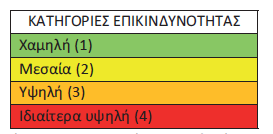
Building Risk Categories
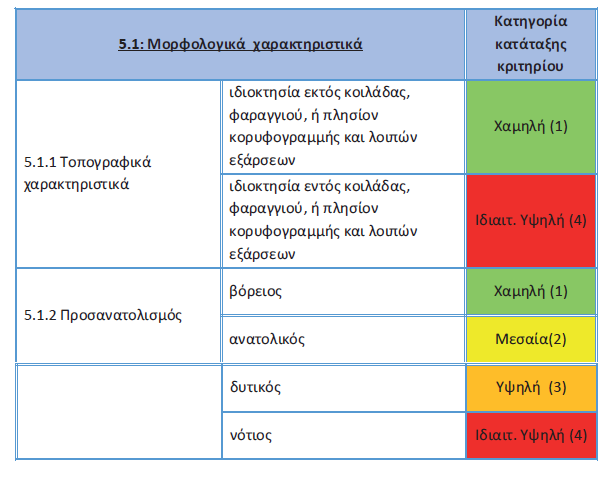
Assessment of morphological characteristics of the area surrounding the property
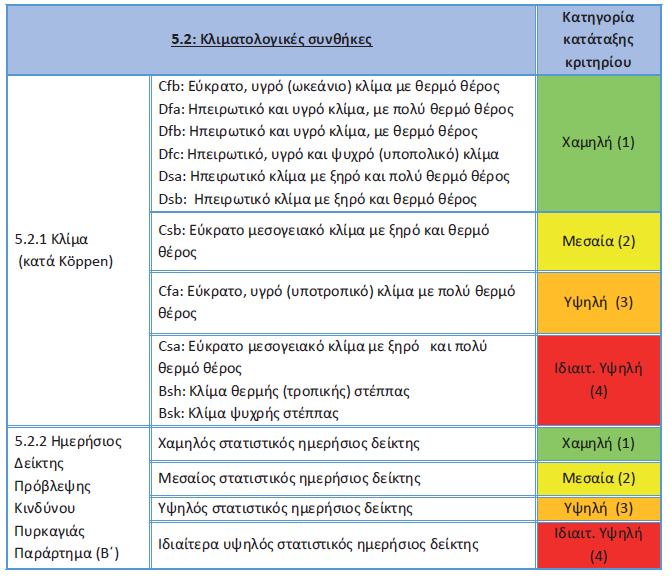
Assessment of climatic conditions in the area surrounding the property
Calculation of Average Slope
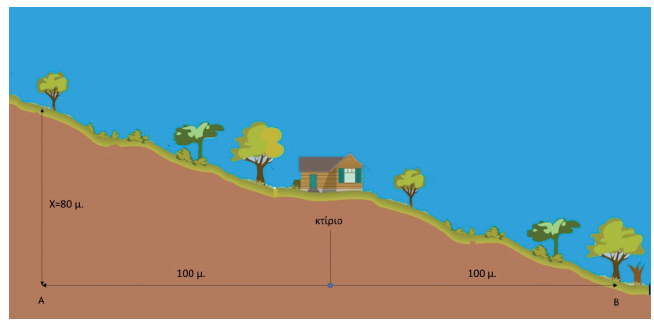
Example of Average Slope Calculation
The average slope is calculated as the quotient of the difference in elevation between the ends of a horizontal section 200 m long (100 m on either side of the property) and the length of that section.
Average slope = height X/length AB = 80 m / 200 m = 0.40 = 40%
Property slope assessment
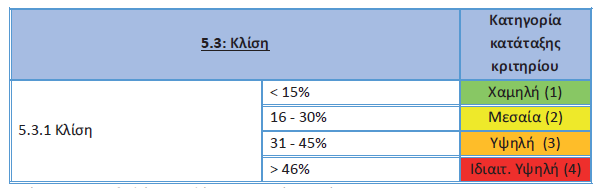
See more
Highly flammable endemic plants
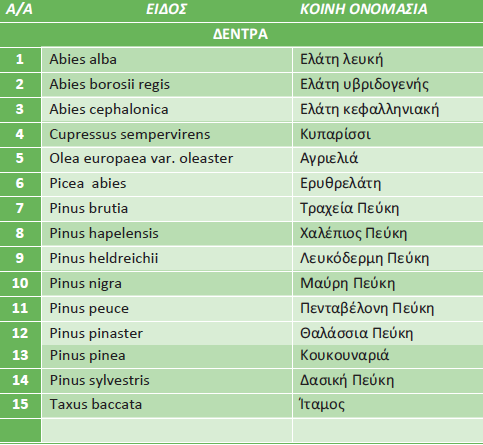
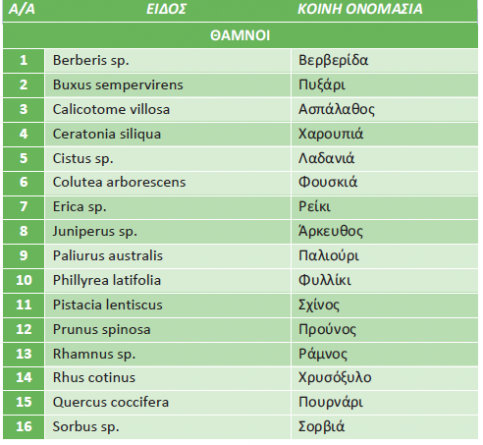
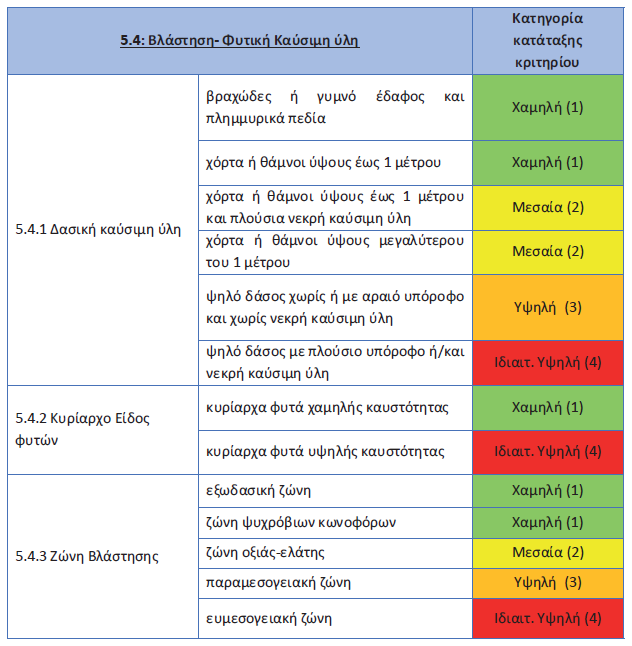
Assessment of vegetation-plant fuel in the area surrounding the property
Assessment of infrastructure and networks in the area surrounding the property
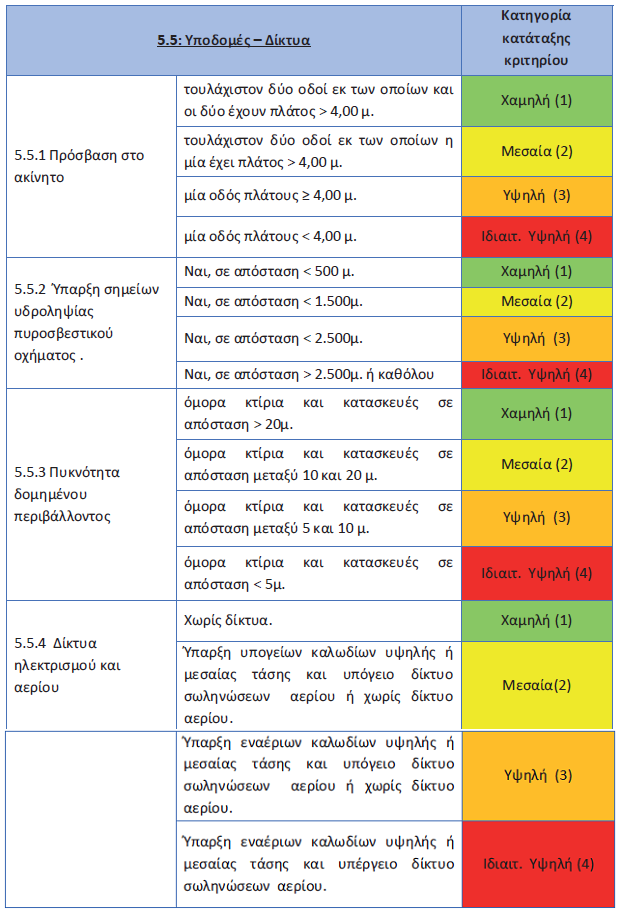
Assessment frequency incidents and intrinsic risks area influence property
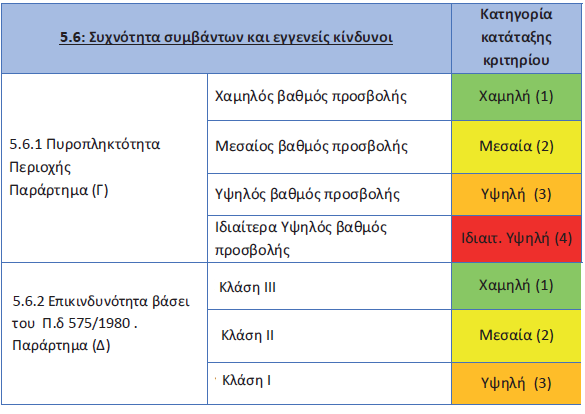
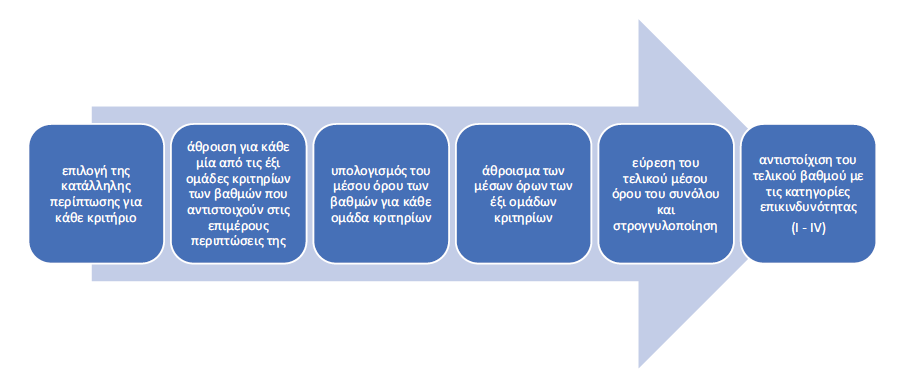
Determining the riskiness of a property
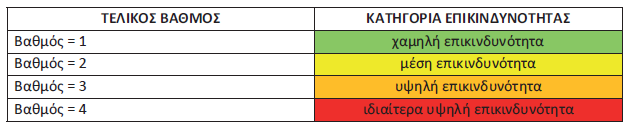
Procedure for calculations for the determination of the riskiness of real estate
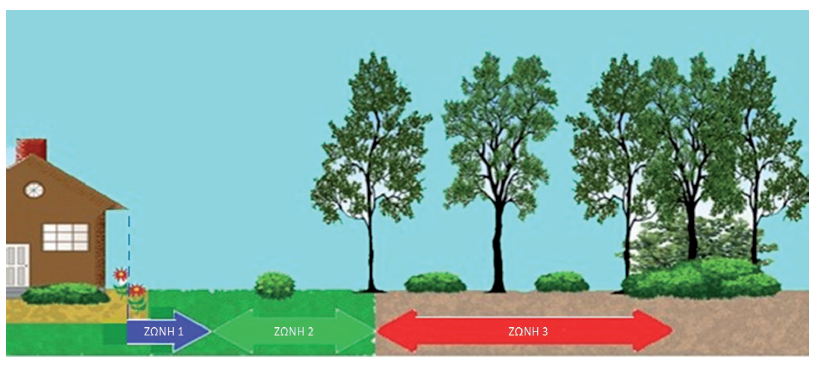
Schematic cross-section of protection zones
Protective belt covers
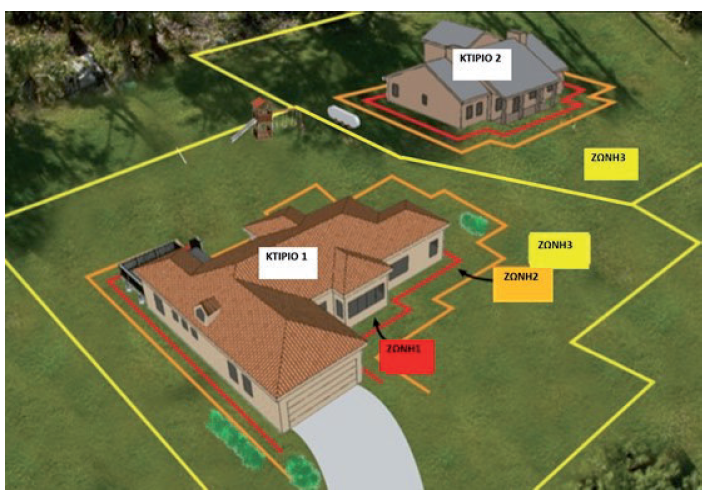
The zones 3 of the two adjacent properties are contiguous with each other.
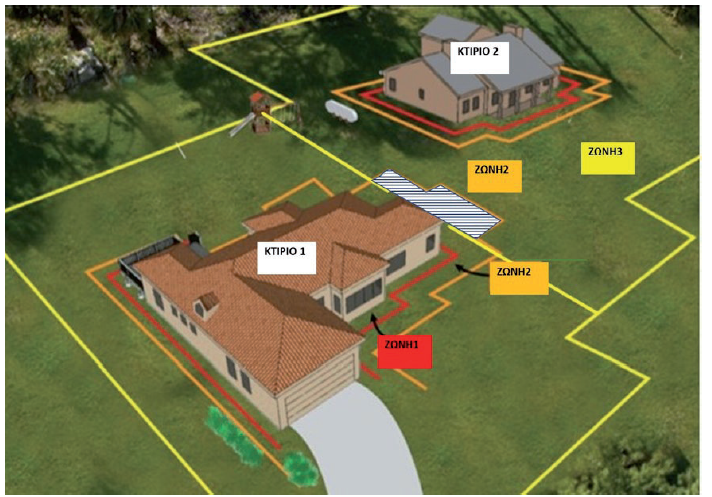
The property with building 1 does not have sufficient width for the full development of zone 2 to the east of it, and part of it (marked with a line) falls within the neighboring property, which, based on the configuration of the protection zones, could apply the conditions of zone 3 in this location. The creation of zone 3 at this location increases the risk of fire spreading to the property with building 1. Therefore, property 2 must, in the overlapping section, grade its planting in such a way as to meet the requirements of zone 2.
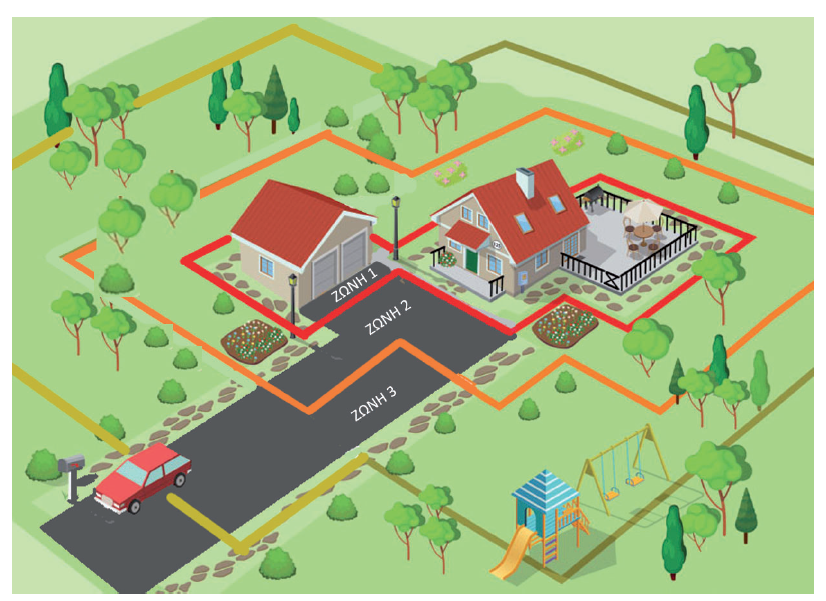
Protective zones
FREQUENTLY ASKED QUESTIONS QUESTIONS
The regulation aims to establish a uniform and mandatory application framework measures and means of fire protection for the properties that are located within or nearby forests and forestry areas. It specifies measures for preventive fire protection as well as and minimum requirements for passive and active fire protection, both for the buildings, newly constructed and existing, as well as for the surrounding area of their, in order to to strengthen the degree of fire safety of the property, to reduce its vulnerability to fire and a64> to limit its contribution to the spread of it.
This concerns the properties that have buildings and are located:
- In forests or forest ecosystems or forest areas
- On grasslands located on semi-mountainous, mountainous, and uneven terrain, whether public or recognized as private.
- In lowland grassland areas (not mountainous or semi-mountainous and not located on uneven terrain)
- They are located in all or in part within a radius of 300 meters from the boundaries of forest areas
- They are located within the suburban greenery and in declared forestation or reforestation areas
- They are found in parks and groves in cities and residential areas.
You should consult an engineer to locate your property on the forest map and then examine whether there is an obligation to prepare a fire protection study.
You must contact immediately a mechanical/ competent technical scientist who will examine the property with the building and will then prepare a Risk Form Risk Assessment and Technical Report.
Following an on-site inspection, the engineer/technician scientist proceeds to examine the criteria of risk of the property and completes the form for assessing the risk from the which results in the classification of. In continuation drafts report in which includes in any case the following:
I am interested in Thermal insulation
Description of the property, the building, the facilities of the and the surrounding area, with reference to the data that document the selection of criteria for ranking the property as towards the riskiness of and as well as towards the measures fire protection that are applied (the location of the property as towards the forest area and as towards the neighboring buildings, geometric characteristics, structural materials, vegetation, etc.).
Required preventive measures, measures passive fire protection and means active fire protection.
Plan floor plan of the property where will show the necessary information such as indicatively, the locations of the buildings main and auxiliary use, access to the property, the zones of protection, the positions and distances of the trees, the distances of neighboring buildings, etc.
In the case of properties with existing buildings, the technical report shall also list the actions and works that need to be carried out.
The proposed measures are preventive, passive, and active (suppressive) fire protection and should be applied in their entirety to new buildings, while for existing buildings it is provided that:
a) The risk assessment form and the report of the competent technical scientist with accompanying data shall be submitted by an authorized administrator by March 31, 2024. The property owner must, within one month of the above date and for each subsequent year until April 30, 2024, must submit a fire safety measures implementation statement declaring that they have taken all necessary actions and meet the requirements of the regulation for the protection of their property in the event of a fire, as specified in the report of the competent technical scientist.
b) Preventive fire protection measures are mandatory starting this fire season.
c) Passive and active fire protection measures must be implemented by March 31, 2025, for properties classified as high and very high risk, and by March 31, 2026, for properties classified as low or medium risk.
After the drafting of the Technical report, the owner of the property is obliged within one month from the above date and, in any case, until April 30, 2024, to submit the Declaration of Implementation of Fire Safety Measures of the fire safety measures in which it declares the correct implementation of the measures provided for in the report of the competent technician report of the competent technical scientist based on the provisions of the regulation for the protection of the property them in the event of a fire.
Until the operation of the special electronic platform in which will be registered the Form for the Assessment of the risk, the Report of the competent technical scientist and the Declaration Implementation of the fire safety measures of the owner, the above information shall be submitted in duplicate in printed form to the relevant Municipality.
This regulation specifies fire protection measures and minimum requirements for passive and active fire protection, both for buildings, newly constructed and existing, as well as for their surrounding area, in order to reduce their vulnerability to fire and limit their contribution to its spread.
The measures introduced by the regulation apply in addition to the requirements of the relevant building fire protection regulation and firefighting provisions for preventive fire protection and prevail if they are more stringent.
Furthermore, the requirements of this regulation apply in parallel with the requirements of other specific regulations governing the safety and functionality of structures or their installations (e.g., earthquake protection, energy efficiency, lightning protection, accessibility, etc.).
Preventive fire protection measures include, among others:
Access to the property, the creation of a protection zone with a minimum width of ten meters in the area surrounding the property width of ten meters in three levels with the aim of slowing down the rate of the rate of the rate of the rate of the rate of the rate of the rate of the rate of the rate to slow down the rate of the fire and to allow the intervention of firefighters.
At the same time, it is prohibited to store combustible or flammable materials and objects, store firewood near buildings, and store flammable materials such as fuel for gardening equipment, etc.
For existing buildings, however, the maintenance of legally installed existing above-ground gas fuel tanks will continue to be permitted on an exceptional basis until December 31, 2030.
In addition it is necessary to regularly clean the courtyards, the roof and the gutters from debris and remnants of vegetation.
Οι ιδιοκτήτες κάθε ακινήτου στις περιοχές αυτές θα πρέπει να προχωρήσουν στην κατάρτιση σχεδίου προετοιμασίας εκκένωσης σε περίπτωση πυρκαγιάς.
Fencing is also mandatory for existing buildings.
It is also mandatory to replace or add metal fiber mesh to the building’s window frames for high-risk and particularly high-risk properties.
In the event of renovation, it is also mandatory to invest in the building with non-combustible materials. a8> building with non-combustible materials (e.g. plaster, brick, stone, etc.).
Compliance with the requirements of the regulation is checked following an on-site inspection by a three-member committee appointed by the relevant municipality and consisting of a forester or agronomist, an engineer, and another employee of the municipality’s Civil Protection Department.
In the event of non-compliance with the requirements of the regulation, administrative and criminal penalties are imposed on property owners. Administrative fines constitute revenue for the relevant municipality.
You will need to contact an engineer to locate the to locate your property on the forestry map and to examine in continue if there is an obligation to prepare a study on fire protection.
Those located in:
Forests or forest ecosystems or forest areas
Grassland areas that are located on semi-mountainous, mountainous and uneven terrain, whether they are public or they are recognized as private
lowland grassland areas (not mountainous or semi-mountainous and not located on uneven terrain)
In all or in part within a radius of 300 meters from the boundaries of forest areas
Peripheral green and in declared forestation or reforestation areas
You should immediately contact an engineer/qualified technical scientist, who will inspect the property and the building and then draw up a Risk Assessment Form and Technical Report.
Following an inspection, the engineer/technical scientist examines the risk criteria for the property and completes the risk assessment form, which determines its classification. He then draws up a report that must include the following:
Description of the property, the building, the facilities of the and the surrounding area, with reference to the data that document the selection of criteria for ranking the property as towards the riskiness of and as well as towards the measures fire protection that are applied (the location of the property as towards the forest area and as towards the neighboring buildings, geometric characteristics, structural materials, vegetation, etc.).
Required preventive measures, measures passive fire protection and means active fire protection.
Plan floor plan of the property where the necessary information will be recorded, such as indicatively the locations of the buildings main and auxiliary use, access to the property, the zones of protection, the positions and distances of the trees, the distances of neighboring buildings etc.
Until the operation of the special electronic platform in which will be registered the Form for the Assessment of the risk, the Report of the competent technical scientist and the Declaration Implementation of the measures fire safety of the owner, the above information shall be submitted in duplicate in printed form to the relevant municipality.