



Linear Design
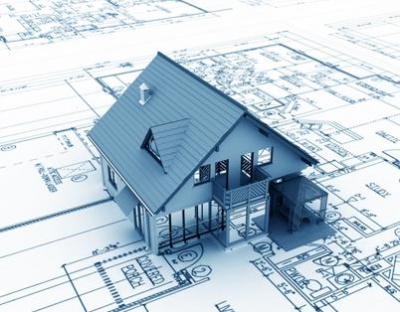
Scale design
Scale drawing allows us to reproduce a large object on small pieces of paper. In practice, when we talk about scale drawing, we mean reducing the size of an object or dividing all its dimensions by a specific number. The number we use each time is proportional to the size of the object we want to draw. For example, if we want to draw a cup, we do not need to reduce its size, but we draw it in the same dimensions, i.e. on a 1:1 scale. If we want to draw a chair, we just need to make it two or five times smaller, i.e., draw it at a scale of 1:2 or 1:5. If we want to draw a room, we reduce it 10 or 20 times, i.e. we draw it on a scale of 1:10 or 1:20. If we want to design a house, we reduce it 50 or 100 times, i.e. we design it on a scale of 1:50 or 1:100. If we want to design the whole of Crete, we have to reduce it by about 250,000 times, i.e. design it on a scale of 1:250,000.
The 1:X scale means that we must know all the dimensions of the object and these to divide them by the X.
The drawings provided in the exams indicate the actual dimensions of the object. This applies to all drawings, i.e. the dimensions indicated on them are the actual dimensions, regardless of how small the object has been drawn. When someone asks us to redraw an object on a specific scale, we must divide all the dimensions of the object by the denominator of the scale requested. For example, if we are asked to redraw an object on a scale of 1:50, we must divide all dimensions by 50.
When we divide dimensions, we convert them to centimeters. For example, if we are asked to convert 1.2 meters to a 1:50 scale, we first convert 1.2 meters to centimeters, i.e. 120 centimeters, and then divide it by 50.
Typically, scales can be infinite, as numerous as numbers. However, in practice, a convention has been established, and we use specific scales depending on the size of the objects we are designing. These are: 1:1, 1:2, 1:5, 1:10, 1:20, 1:25, 1:50, 1:100… These scales are the most common ones requested in design exams.
Because divisions are time-consuming, we recommend the following practical and quick method for finding the design dimensions:
On a scale of 1:100, we use the same object sizes, but in centimeters.
On a scale of 1:50, we double the dimensions of the object in centimeters.
For example, 1.5 meters is converted to 3 centimeters. 0.3 meters is converted to 0.6 centimeters.
On a scale of 1:25, we quadruple the dimensions of the object in centimeters.
For example, 1.5 meters is converted to 6 centimeters. 0.3 meters is converted to 1.2 centimeters.
On the scale 1:20, we multiply the dimensions of the object by centimeters.
For example, 1.5 meters is converted to 7.5 centimeters. 0.3 meters is converted to 1.5 centimeters.
On a scale of 1:10, we simply divide by ten.
On a scale of 1:5, we either divide by five or divide by 10 and multiply by 2.
E.g. 15 centimeters: 15:10 = 1.5 x 2 = 3.
On a scale of 1:2, we divide by two.
On a 1:1 scale, we draw the same sizes that are given to us.
Contents
Types of designs
In general, there are two categories of design: impression designs and application designs.
We use impression drawings to get an “impressive” picture of the object we are designing, but they do not give us accurate information about the size and dimensions of the objects. Impression drawings include sketches, perspectives, and rough drafts.
We use implementation designs to provide a complete description of an object for the purpose of its production.
Freehand drawing is classified as impressionistic drawing, while linear-technical-architectural drawing is classified as applied drawing. Linear drawing can also be referred to as construction drawing, as it is used for the construction of the designed object. For this reason, it must have precise dimensions and information regarding its form.
Linear can be expressed with two- and three-dimensional designs.
At exam level, we learn and use two-dimensional drawings.
Since the objects we design are three-dimensional, we use a series of different drawings to provide all the relevant information. We imagine that each two-dimensional drawing is a plane that we place in any position we want in relation to the object we want to design. In general, we have two types of two-dimensional drawings: projection drawings and section drawings. We use section drawings to cut the object at the point we are interested in and see what is happening inside it. We usually use two types of sections. When we cut the object parallel to the ground, we have a plan view if we look down and an elevation view if we look up. When we cut the object vertically, we have a vertical section drawing. We have projection drawings when we are outside the object and the plane of our drawing acts as a mirror on which the object is represented without touching it. Projection drawings are elevations, but also plans that view the object from above without cutting it.
Contents
Floor plan
This note refers only to the floor plans of buildings.
The floor plan is a cross-section drawing that cuts the object to be designed parallel to the ground, ignores the upper half of the building we are cutting, and uses the object from the point where we cut downwards. It works like a large knife cutting the object in two. Floor plans provide information about the internal layout of buildings, the thickness of walls, the positions of openings and frames (doors, windows), the relationships between interior spaces, their possible furnishings, and the configuration of the floor.
Because the objects we cut are three-dimensional, their constituent elements are not at the same height. As a result, when we cut a building, we see both the points that have been cut (e.g., walls) and the points that are lower than the intersection point and are simply projected (e.g., chairs, tables, benches, stairs, paving, etc.) are also visible.
However, the floor plan is two-dimensional, and in order to easily and quickly identify which parts of the plan are cut away and which are projected, we use different line thicknesses. In general, we use thick lines for the cut elements and thin lines for the projected elements.
Contents
Sections
Exactly what we said about floor plans also applies to sections, with the difference that the drawing plane is not horizontal but vertical to the ground.
The sections provide us with information about the interior of the buildings, particularly regarding heights, different floor levels (which is why we use elevations in many section drawings), the heights of the frames, the starting point of the windows (sill) and their upper height (lintel).
Contents
Aspects
Elevations are generally projection drawings that give us an idea of the external appearance of buildings and their morphological configuration.
Usually, the only point that is cut off in a view is the ground on which the object stands.
Plans relating to the same subject complement the information they convey. In theory, the most basic plan and the one that gives us the most information is the floor plan. If we have a series of drawings relating to the same object, then they are interrelated, and this relationship is expressed in the design process we follow. We usually start the design from the floor plan of an object. The construction of the other drawings, elevations, and sections, is based on information that we obtain directly and geometrically from the floor plan. The floor plan shows the position at which the object is cut to design its section or sections. To create the section of the object whose floor plan we have already designed, we can easily and quickly implement the section widths by taking projections from the floor plan, parallel to the section line.
To make it easier to design the facade of a building, we can quickly and easily obtain most of the heights from the sectional drawing.
Contents
Placement of drawings
The drawing paper used in the exams measures 50 x 70 cm. Twelve centimeters have been removed from the left side of the paper, leaving a drawing area measuring 58 x 50 cm. In this space, we are asked to arrange the drawings we are given in a functional and harmonious way. Functional placement is one that allows us to show that information can be transferred from one drawing to another quickly and geometrically. For example, the floor plan is usually placed at the bottom of the paper and the section parallel to the section line in the floor plan and towards the side indicated by the arrows. The elevation is usually placed either next to the section so that we can quickly and geometrically obtain the heights of the elevation from horizontal projections from the section, or parallel to the side of the plan to which it corresponds, from which we can quickly and geometrically obtain the widths of the elevation. Harmonious placement is one that uses the entire size of the paper, leaves no large gaps without drawings or letters, and gives a clear picture of the drawing surface.
Contents
Design process
1. We read the instructions carefully to understand what is required. 2. On a piece of scrap paper, we sketch the placement of the designs we have chosen. In the frame of each drawing, we write down the width and height it will have on the scale we are asked to draw it on. We calculate the gaps that will be created between the drawings, both in height and width.
3. We draw the space occupied by each design on paper. 4. We start with the floor plan, drawing the outline of the design without any design details. Gradually, we proceed to complete the drawing, adding window frames, paving, furniture, etc. We follow the same procedure for the rest of the drawings. The pencil drawing must be accurate and detailed.
5. We ink the floor plans and sections in their entirety with a 0.2 pen. 6. We go over the intersecting elements in the floor plans and sections again with a 0.6 pen. 7. We ink the elevations with the appropriate line thicknesses.
8. Once the drawing is complete, we correct any errors in the appropriate manner.
Contents
Required linear design instruments
1. 60×80 cm board. 2. 80 cm parallelogram. 3. 450 triangle, 30 cm long with foot. 4. TRIANGLE 600, length 30 cm with base
5. SET OF PENCILS 0.2, 0.4 & 0.6
6. PENCILS 0.1 , 0.3
7. RULER 50 cm
8. STATIONARY DIABETES WITH EXTENSION
9.BOMBA (small diabetes device with built-in pen holder)
10.BELL
11.GOMA GRI FOR INK
12.MECHANICAL PENCIL FOR THICK LEADS
13. MYTES 3H, UK
14.CARDBOARD
15. Razors
16. GLASS CLEANING STICKS 50 x 70
17. WHITE GOMA
18. PLASTIC FOLDER 60 X 80
19.TAY with a measuring tape
20. BROOM
21.METAL SHIELD
Contents
Line thickness
The thickness of the lines we use in linear drawing is a personal choice. However, whatever choice we make, it should follow some general rules:
1. Intersecting elements are drawn with thick lines.
2. Projected elements are drawn with thin lines.
3. Depending on the magnification we use in a drawing, the line thicknesses also increase.
For example, if we use a 0.6 pen for an intersecting element on a scale of 1:50, we will use a 0.8 pen if the same element is drawn on a scale of 1:20.
Similarly, if we use a 0.2 pen on a 1:50 scale elevation, we will use a 0.3 or 0.4 pen on a 1:20 scale.
Below, we suggest a range of line thicknesses depending on what we are designing:
0.1 pen: used for hatching, broken lines, dimensions, trees, and soil. 0.2 pen: used for projection lines, elevations, sections, and floor plans, hatching, paving, and masonry.
0.3 pen: we use it for projection lines, in elevations, sections, and floor plans, at a scale of 1:20 or 1:10.
0.4 pen: we use it for projection lines, in drawings on a scale of 1:10 or 1:5 and in thin elements cut on a scale of 1:50 (beams, wooden beams and doors, in sections and floor plans).
0.6 pen: we use it for intersecting elements in floor plans and sections, on a scale of 1:50 and 1:20.
0.8 pen: we use it for intersecting elements on a scale of 1:20 or 1:10 and for the ground line on elevations.
Contents
Correction of plans
To avoid many mistakes, the pencil sketch must be complete so that the ink drawing is a simple copy of the pencil sketch. If we find mistakes after completing the ink drawing, we correct them in the following ways:
1. Razor
2. Gray eraser for ink and shield