



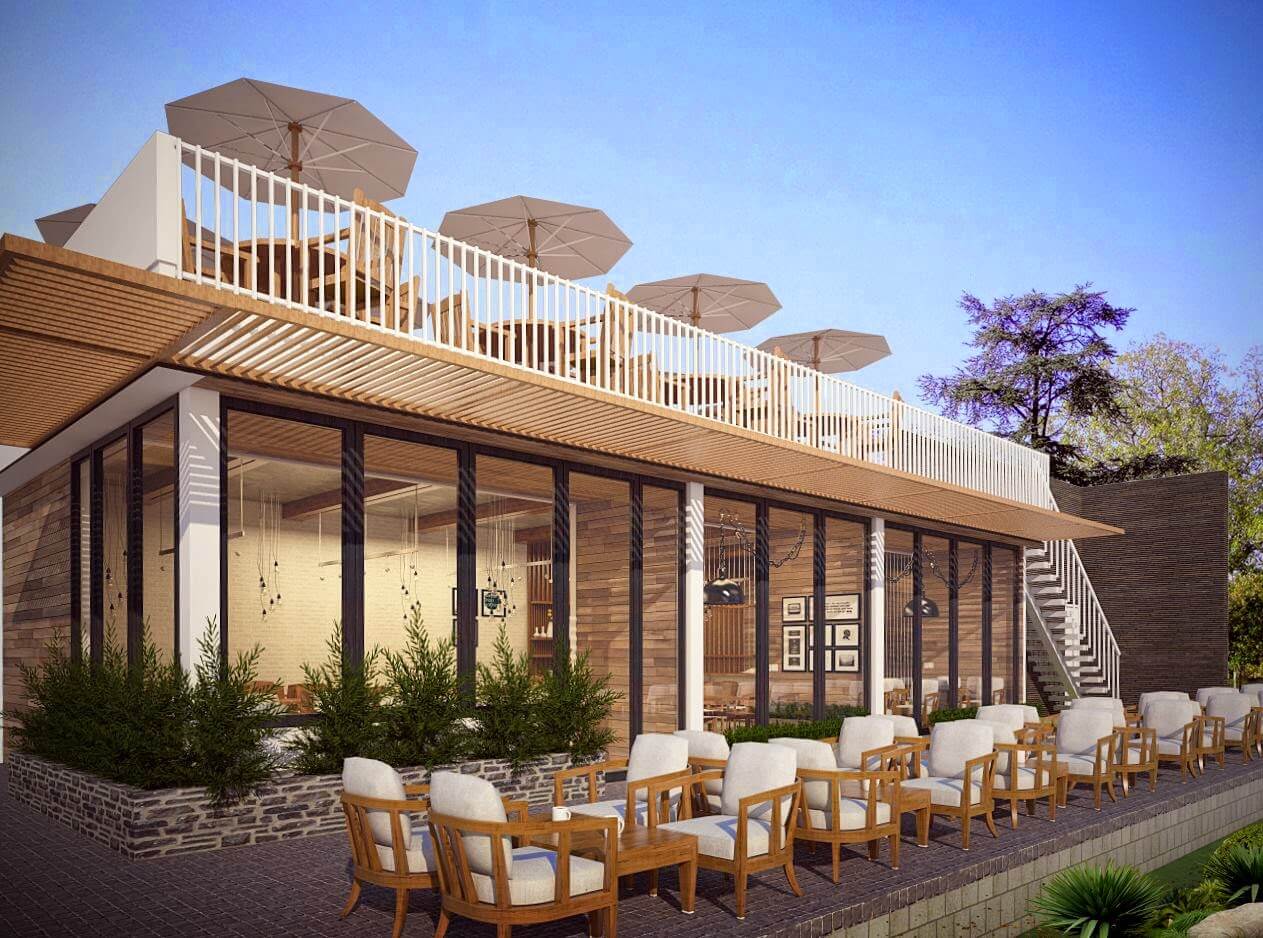
Is it illegal to build shops in public spaces?
Response from the Ministry of Environment to a question from MPs regarding the legality of cafés in public spaces
In Law No. 4067/12, it is stated that in public common areas are permitted structures that are “removable and temporary.”
A temporary structure is defined as “one consisting of assembled and disassembled structural elements, while a temporary structure is defined as “a structure that is installed and removed in demountable parts, does not require extensive infrastructure that would seriously alter the natural terrain, and is installed for a specific purpose and duration in a buildable or non-buildable area.”
A canopy is also defined as “an inaccessible fixed structure, constructed with solid fixed or movable elements on its roof, excluding any other vertical filling elements”, while a pergola is defined as “an external, roofless, fixed structure with a maximum height of three meters, intended for climbing plants or the installation of temporary fabric shades, reed, and movable elements, excluding any other vertical filling elements of the load-bearing structure of the structure.”
The above provisions have created confusion among urban planning authorities regarding permitted structures in public spaces granted by public bodies and local authorities, particularly for the use of tables and chairs, resulting in structures being classified as unauthorized in some areas while in others they are considered legal, e.g., metal structures bolted to the floor with opening horizontal filling elements and an opening roof, while simple wooden open structures, pergolas, are considered unauthorized either when they have fixed shading material or even if they have fabric for shade.
The question of what ultimately applies and whether pergolas or awnings are permitted in public areas or only umbrellas are permitted was answered by the Ministry of the Environment, which stated that these structures should be designed to serve the purpose of the space and should form a unified aesthetic whole. The Ministry of Environment stated that these structures should be designed to serve the function of the space and should form a unified aesthetic whole.
The above texts are from the books of fellow civil engineer Pantelis Papakonstantinou and are available for purchase at the following link: http://www.advice4u.gr/products.html