



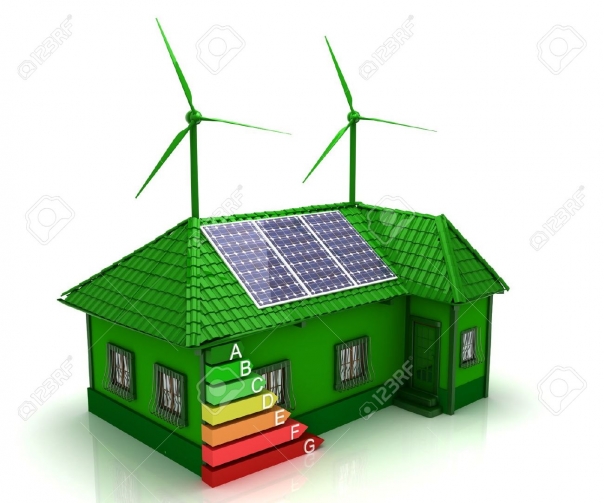
Coming soon are zero-energy homes with zero energy consumption
The HERB project (Holistic Energy-efficient Retrofitting of residential Buildings),
in which participates the University of Athens, is a large-scale international program of cooperation a13> between European universities and industry.
It is co-funded by the European Commission’s Seventh Framework Program for Research and Technological Development, with the aim of developing new innovative and efficient technologies and solutions for the renovation of old buildings. It is noteworthy that buildings consume approximately 40% of the total energy requirements in Europe.
Low-income citizens in Greece are no longer able to meet their basic energy needs. Most homes have had no heating for the last three years and, as most studies have shown, citizens are living in completely unsuitable indoor conditions. This has dramatic consequences for their quality of life and their health. The question, then, is whether it is technically, economically, and politically possible to find solutions that will provide citizens with comfort and basic human living conditions,” emphasizes Professor Manthos Santamouris of the Department of Physics at the University of Athens. Manthos Santamouris.
The University of Athens, together with the European Community, undertook a demonstration project with the aim of proving that it is technically and economically feasible to improve citizens’ living conditions by upgrading the energy efficiency of their homes using particularly low-cost materials and systems.
The total cost of renovating all 14 apartments is estimated at €100,000 and will be fully covered by the program and Greek construction material manufacturers.
In addition, according to Mr. Santamouris, the building’s tenants will receive €2,500-3,000 per year from the Public Power Corporation (PPC) for operating the photovoltaic systems. “This money will cover the common electricity costs and the electricity used by the heat pump for heating and cooling,” the professor points out.
However, even without funding on such a scale, energy upgrades prove to be economically viable. According to Mr. Santamouris, the investment can be recouped in three to five years for those who want to renovate a building to make it more energy efficient.