



What changes apply to the construction of agricultural warehouses?
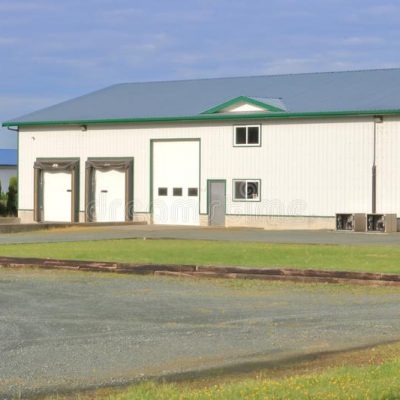
New provisions apply from 2020 for the issuance of Building Permits and the Approval of Small-Scale Construction Works. As part of the changes made by the Ministry of Environment, it also amended the rules for licensing stone-built agricultural warehouses up to 15 square meters. These warehouses are auxiliary structures used to support farming activities by storing agricultural tools, machinery, and products.
Muffaway
The main change that has been made is that the Ministry of the Environment has abolished the possibility of building these warehouses on agricultural land with a minimum area of 1,000 square meters. 000 square meters, and now the plot of land must be even in accordance with the applicable urban planning provisions.
For the construction of these small storage facilities instead of the building permit is required “Approval of Works of Minor Scale” which is issued by the Urban Planning Department of the Municipality of the Municipality, after approval by the Directorate of Agricultural Economy & Veterinary Medicine, which will justify the necessity and the expediency of the existence of the warehouse
So now we can’t build a farm warehouse on one acre? Until 2018, in order to build a stone warehouse, the plots of land had to be even. Subsequently, with Decision No. 6970/4461/12-10-2018 of the Minister of the Environment, the urban planning provisions were amended and an exception was made to allow the construction of a warehouse on a farm of at least 1,000 square meters, provided that it is at least 5 meters from the boundaries of the farm. the construction of a warehouse on a farm of at least 1,000 square meters, provided that it is at least 5 meters away from the farm boundaries. However, with Decision No. YPEN/43266/1174 of the Deputy Minister of Environment and Energy in 2020 (Government Gazette B 1843 – 13.05.20), the lower limits of 1,000 m² on the surface of the plot and the minimum distance of 5 m from its boundaries were abolished. Therefore, today we build rural stone warehouses only on even plots and at a distance of 10 meters from the boundaries, in accordance with the 1985 Presidential Decree on off-plan construction, as amended by Law 4759/2020.
A year ago, my neighbor built a legal warehouse measuring 1,000 square meters, but today I can’t get a permit for a 3,500-square-meter olive grove?
Indeed, the frequent changes in urban planning legislation create injustices. However, urban planning is a dynamic process, which is why the Ministry of the Environment adapts legislation to emerging needs, with the aim of preventing arbitrary construction and creating a humane and sustainable environment. In this case, it was found that the spirit of the legislation, which was intended to support farmers, had been circumvented by the construction of a small warehouse for storing agricultural tools and machinery. Thus, many people, in order to avoid the “obstacle” of building permits and inspections, began to buy small plots of land outside the plan, which were either cultivated or planted with seedlings or vegetables, and then applied for permission to build an agricultural warehouse. The result of all this was the sprouting up of “small houses,” mainly on the islands and in coastal areas. In fact, many, after securing water and electricity supplies, then made illegal additions, converted pergolas into rooms, and generally created holiday homes. The state has committed to the Council of State that it will not continue to legalize unauthorized buildings after July 27, 2011, and that it will prevent any unauthorized construction. For this reason, these unauthorized buildings will be revealed through the building’s identity.
How do we obtain a permit for a stone-built agricultural warehouse outside the plan?
According to the new provisions, with the electronic issuance of small-scale building permits from the TEE’s e-adeies information system -YPEN, the process is simplified for those who want to build a stone-built agricultural warehouse on cultivated land, whether there is a residence or not. Specifically, the construction of a single stone warehouse per cultivated farm is permitted, in accordance with paragraph 4 of Article 6 of the Presidential Decree of 24.5.1985, with a surface area of up to fifteen (15) square meters and a total height with the roof of up to three (3.00) meters, provided that reinforced concrete is not used in its roof and it is constructed independently of any existing main building, after approval by the competent Directorate of Agriculture, subject to the provisions of the above provision of the Presidential Decree of 24.5.1985.
What are the supporting documents for the issue of the Small-Scale License for a warehouse?
I am interested in Thermal insulationI am interested in Thermal insulation
The general supporting documents are:
a. Application by the owner or person with legal rights, stating their full details and the details of the property.
b. Approvals from the competent authorities and collective bodies (such as the Ministry of Culture and Sports, the Council of Architecture, etc.) where these are required by the provisions in force, with the accompanying documentation.
c. Certificate – Engineer’s Technical Report
d. Project Budget
e. Excerpt from the cadastral diagram
f. Photos of the property
g. Declaration of consent from the co-owners of the property, if the work is carried out in common areas.
h. Submission of the project’s Health and Safety Plan and File, where required
The specific supporting documents for a 15 m² stone warehouse are as follows:
a) Approval of the competent Directorate of Agricultural Development and Food that the warehouse is deemed necessary, for the storage of agricultural products in general and supplies.
b) Topographical diagram showing the warehouse (location, dimensions, distances, etc.).
c) Floor plans and sectional drawings on a scale of 1:100 or 1:50.
What else should we pay attention to?
The total height of the building, including the roof, is 3 meters, and reinforced concrete is not used in the roof. Where special provisions in the area require the construction of a roof, a roof must be built, and similarly where the construction of a flat roof is required. The height of 3.00 m is calculated including the parapet of the flat roof.
The 15 m² also includes the masonry.
The construction must be made exclusively with stonework and not with concrete, bricks, cement blocks, panels, plasterboard, and other building materials.
Furthermore, where there are special regulations or building restrictions on morphological elements, e.g., Pelion, the Cyclades, etc., the consent of the Architectural Council is required.
If there is a building on the plot, the building’s legal documents are required, e.g. Building Permit, completion under Law 4178/13 or Law 4495/2017, Engineer’s certificate for buildings constructed before 1955.
How do we obtain approval from the competent Directorate of Rural Development and Food that the warehouse is deemed necessary?
By submitting an application to the competent Directorate of Rural Development and Food of the Regional Unit, we request the Granting of Approval for the Feasibility of Constructing a Rural Warehouse. The following supporting documents are required for the approval of the feasibility and functionality of the construction of an agricultural warehouse:
1) Printed application in which will be mentioned the type of cultivation, the location and the area of the farm or declaration of cultivation in the OSDE.
2) Copies of forms E1 and E9, where the declared agricultural parcel is indicated.
3) Three copies of the topographical diagram, with the location of the warehouse marked on it at a distance of 10 m warehouse at a distance of 10 m from the boundaries, in which the uses of the land are mentioned in, the terms and restrictions on construction.
4) Three copies of architectural plans (floor plan, elevations, and section) that follow the design functionality of the agricultural warehouse. The ventilation skylights and the large loading door must be designed in accordance with urban planning restrictions.
5) Status – Responsible Declaration with the corresponding supporting documents, of the for storage of machinery, tools, supplies, etc.
6) Copy of the latest declaration of cultivation of the estate.
7) Copy of title deeds with confirmation of registration from the Land Registry.
8) Affidavit pursuant to Law 1599/86 stating that the warehouse will be used exclusively for the storage of agricultural products and supplies.
What are the specifications for the topographical diagram for the Granting of Feasibility?
The topographical diagram must have the following:
It must be dependent on the State Coordinate Network EGSA’87 (Hellenic Geodetic Reference System), with the coordinates of the vertices listed in the Work (Distribution or Reallocation) system.
It must include an excerpt from the corresponding diagram/sign of the GYS scale 1:5000, which will show the exact location of the property.
It must include an excerpt from the wider area of the Distribution map, Reallocation, etc., with the area marked.
The distance from the designated coastline must be indicated.
It must have a certificate stating whether it falls within areas of environmental interest, protected areas (Ramsar, Natura, National Parks, parks, etc.) and archaeological interest, with a clear reference to the restrictions imposed on the specific zone or area.
Indicate the non-forest nature of the area and the status of the forest map (ratified/posted).
Indicate the current land uses and, until they are determined, simply state that they have not yet been determined.