



Preserved buildings: legislation on permissible interventions
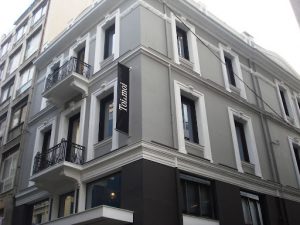
Introductory remarks – the legal concept of a listed building
– Advertisement –
3DR Engineering
The concept of a listed building is of great concern to property owners and lawyers alike, for a variety of reasons.
For those who come into close contact with “preserved” items, the following useful legal information should be emphasized:
Their protection derives from Article 24, paragraphs 1 and 6, of the Constitution. The concept of a listed building derives from urban planning legislation, while that of a monument derives from archaeological legislation. a2>The protection of listed buildings is ipso iure and a priori and is almost absolute
The basic legal text regulating listed buildings is Law 3028/2002. Also, at the international level, the 1985 Granada International Convention was ratified by Law. 2039/1992. The Granada Convention protects listed buildings from disappearing and adapts them to modern uses.
Interventions in listed buildings: General rules
As a general rule, listed buildings require prior permission from the competent authority, which is determined on a case-by-case basis. Interventions of any kind and, exceptionally, uses of listed buildings are permitted only on condition that they are in harmony with the character of the building, its architectural structure and layout, its building and construction potential, aim to demonstrate and preserve its aesthetic and architectural character, do not substantially alter its form, and do not overlook the listed building and its surrounding area. The relevant decisions of the administration must be specifically justified (Council of State 3114/1998), otherwise they are voidable.
The designation of a building as preservable under urban planning legislation does not depend on its structural adequacy nor is it impeded by any designation as dangerously dilapidated under Presidential Decree 13-22.4.1929. As is accepted, these two procedures are independent and serve different purposes, the first being the permanent protection of elements of cultural heritage that are deemed to be listed, and the second being the protection of the public from structurally dangerous buildings. The type and extent of permitted or imposed interventions in the building, including its partial or total demolition, the restoration of certain elements of the building, or its complete reconstruction. Article 4(2) of Law 1577/1985 also stipulated that an essential part of the procedure for declaring buildings as preservable was the notification of the owners concerned, either by notifying them of the explanatory report or by posting it at the relevant municipal or community office and publishing it by the municipality or community, in a local newspaper or a newspaper of the capital of the prefecture (see Council of State 4221/2005).
The crisis of Administration always must bring special justification as towards any necessary intervention of any kind in the the necessary for any intervention in a protected area. The justification may be derived from the information in the file. Already according to the GOK of 1985, the Ministerial Decision designating a building/monument as preserved and imposing special conditions for protection/restrictions on construction as appropriate as justified. The same applies and under the state of the NOK of 2012.
I am interested in window framesI am interested in window frames
Finally, it is accepted that the additional building conditions and restrictions for listed buildings are imposed for the purpose of preserving the building in question as a protected building and are not compensatory in nature, nor can they ever lead to the general building conditions applicable to the area being exceeded and use (Council of State 2987/1998).
I will devote further articles to specific issues surrounding the law on listed buildings.
lawspot.gr