



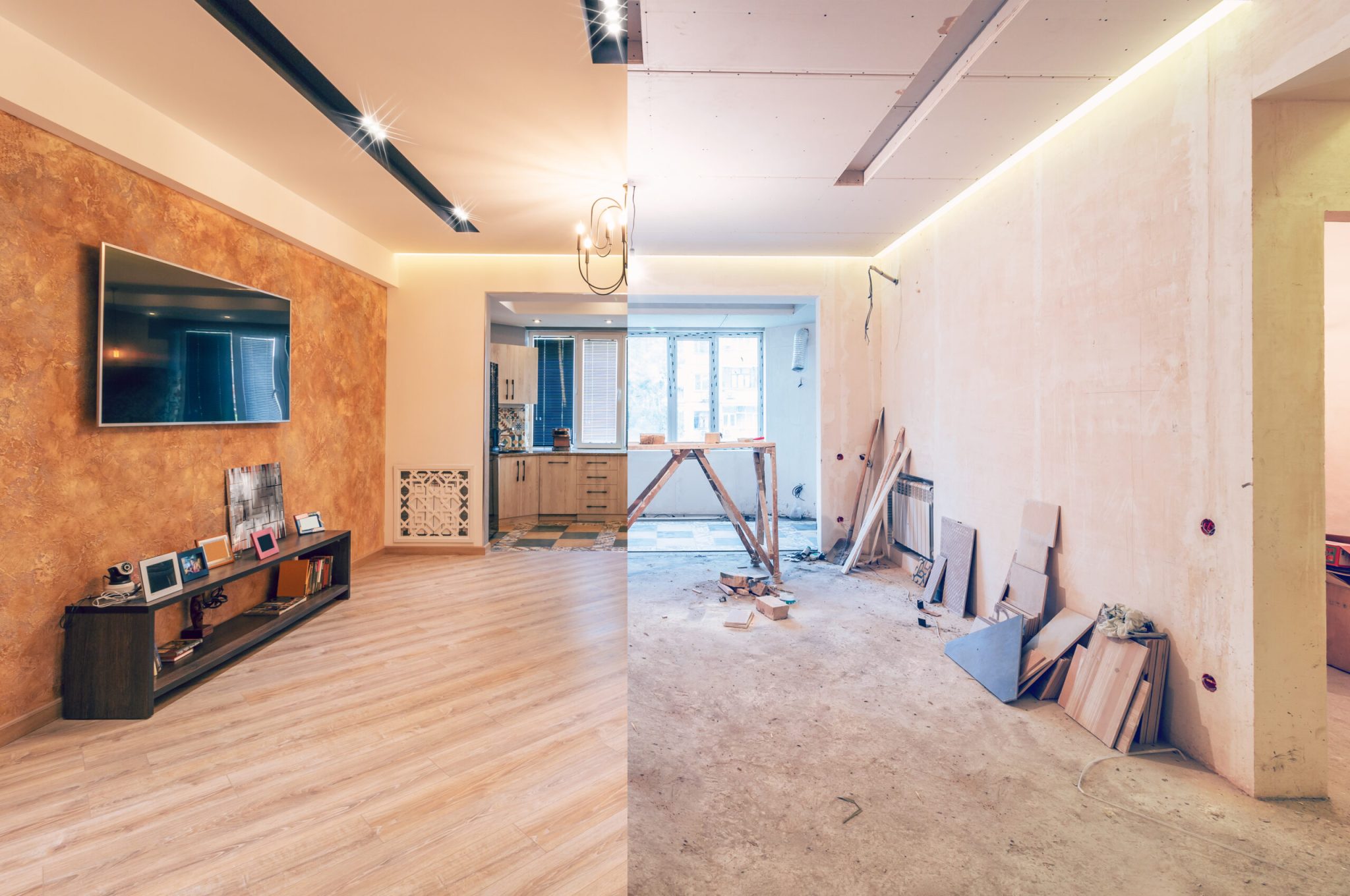
Gone are the days of cheap renovations • Skyrocketing costs for materials
Hundreds of thousands of citizens living in properties within or near forests and wooded areas or even urban parks will now have to, under the new Property Fire Protection Regulations recently published in the Government Gazette, to shield them with fire-resistant materials, create fire safety zones, commission a technical scientist to prepare a risk assessment report, and submit an annual declaration of implementation of fire safety measures for their property.
Fines and penalties
In the event of non-compliance with the obligations of the new Regulation, administrative and criminal penalties will be imposed on property owners, with fines starting at €250 and escalating depending on the violation and the size of the property. In particular, this applies to properties located within forests, forest areas, and grasslands, as well as those located, in whole or in part, within a radius of 300 meters from the boundaries of these areas. The requirements of the regulation also apply to properties located within peri-urban green areas and in areas designated for afforestation or reforestation and within a radius of 300 meters from their boundaries, as well as those located within parks and groves in cities and residential areas.
Clear access road
Preventive fire protection measures include the requirement that the access road to the property be free of obstacles and combustible materials (branches, bushes, grass, etc.). In the case of properties where the distance between the entrance to the property and the building is greater than 30 meters, it is also necessary to ensure access for wheeled vehicles, with a minimum width of 3.5 meters and a minimum height of 3 meters. The entrance to the property must have a minimum clear width of 4 meters. For properties outside the city plan where the width of the access road is less than 8 meters, space must also be provided for emergency vehicles to stop within the property.
Perimeter protection zone
A perimeter protection zone with a minimum width of ten meters should also be created around the buildings, subdivided into three levels of graded protection where combustible materials are successively reduced (as we approach the building) with corresponding differentiation and management of vegetation in zones 1, 2, and 3. a2>The first zone adjacent to the building must have a minimum width of two meters around it and must be covered with non-combustible hard materials, otherwise it must remain unpaved. No planting is allowed.
The second zone is three meters wide and adjoins zone 1. Its surface must be non-flammable, while low vegetation with grass or ground cover plants and low shrubs, with a maximum height of one meter, that are resistant to fire is permitted.
The third zone is the furthest from the building and is at least five meters wide. In the case of large plots or fields, this zone extends to their boundaries. Vegetation with trees and large shrubs is permitted, with a distance of at least three meters between them, which are pruned from the ground to a height of three meters. Individual shrubs or shrub islands are also permitted, provided they are not located under trees.
Small plots
In the case of small plots where the minimum width of ten meters corresponding to the three protection zones cannot be ensured, the first unburned perimeter zone must be ensured. In areas or complexes where buildings are less than five meters apart, it is possible to treat them as a single unit.
Cleaning of courtyards
In general, courtyards, roofs, and gutters must be regularly cleaned of debris and vegetation such as pine needles, dry leaves, and grass, and these must be removed. Particular attention should be paid to cleaning the area of roofs within a three-meter radius of chimneys. Owners are also required to prepare an evacuation plan in case of fire.
Fire-resistant frames
Furthermore, with regard to structural fire protection, among other things, the external frames of buildings must be fire-resistant, the roof structure must not be made of wood, etc. As regards the perimeter, in low or medium risk properties, it must be solid, made of non-combustible material, at least one metre high. in low-risk properties, the use of plants with limited combustibility is permitted, and in high-risk and particularly high-risk properties, the minimum height of the solid fence is increased to 1.50 meters. In high and particularly high-risk properties, a metal mesh at least half a meter high with a mesh size of less than or equal to one square centimeter must be installed above the solid fence. In addition, fire protection measures such as sprinklers, installation of water supply points in the surrounding area, etc. are also required.
Report by a technical scientist
In addition, a report must be drawn up by a specialist technical scientist who will examine the risk criteria of the property and complete the risk assessment form. In the case of a building permit for a new building, the report is submitted to the e-Permits information system together with the architectural study. For existing buildings, the technical report shall also list the actions and works that must be carried out to comply with the requirements of the Regulation and whether any adaptation works are required.
The risk assessment form and the report of the competent technical scientist are submitted by an authorized administrator to the special electronic platform before the start of the fire season. The property owner must, by 30/ 4 of each year, the property owner must log into the information system and submit a fire safety measures application form certifying that they have taken all necessary actions and meet the requirements set out in the regulation for the protection of their property in the event of a fire in accordance with the report.
On-site inspection
Compliance with the requirements will be checked following an on-site inspection by a three-member committee appointed by each municipality. In cases of particularly high-risk properties, an on-site inspection will be carried out on a sample of at least 80% of all properties, in high-risk properties at least 60%, and in low- and medium-risk properties, a sample check will be carried out on at least 10% of the properties.
Machi Tratsa