
null
Sidewalk Slabs

A FEW WORDS ABOUT THE INSTALLATION OF SIDEWALK SLABS

Laying paving slabs is easy, quick, and above all, economical. The biggest advantage of paving slabs is that, if any work needs to be done underground in the future, e.g., laying cables, pipes, etc., the slabs can be broken up and, once the work is complete, new ones can be laid without any visible damage or patches in the design.

The steps that must be followed in order to select the selection and the placement of pavement slabs are as follows: the

1. Design

Good design is essential for completing a successful project. This process is necessary for aesthetic, safety, and proper functioning reasons.

2. Selection and ordering of cement slabs

There is a wide variety of sizes, shapes, and colors, as well as a wide variety of textures and materials for the final surface of the paving slab, i.e., you can choose from plain or patterned slabs, or slabs with a final surface made of aggregates of various shapes, colors, and sizes, such as pebbles, mosaic tiles, or a processed surface.

3. Construction of substrate

A hard, flat surface is required for laying paving slabs. If the ground is not rocky and stable, concrete must be added as a substrate; otherwise, if the ground is stable, 3A (gravel) should be added as a base material to the surface to be paved, with the thickness depending on the use, e.g. if it is used for pedestrian traffic, 10-15 cm is generally required, while for roads or projects with wet soil, an engineer should be consulted.

4. Encapsulation

Usually, encasement is achieved by placing cement curbs around the perimeter of the surface you are constructing. Encasement is necessary in all projects involving sidewalk slabs because it ensures that they remain in place and retain their shape over time.

5. Placement

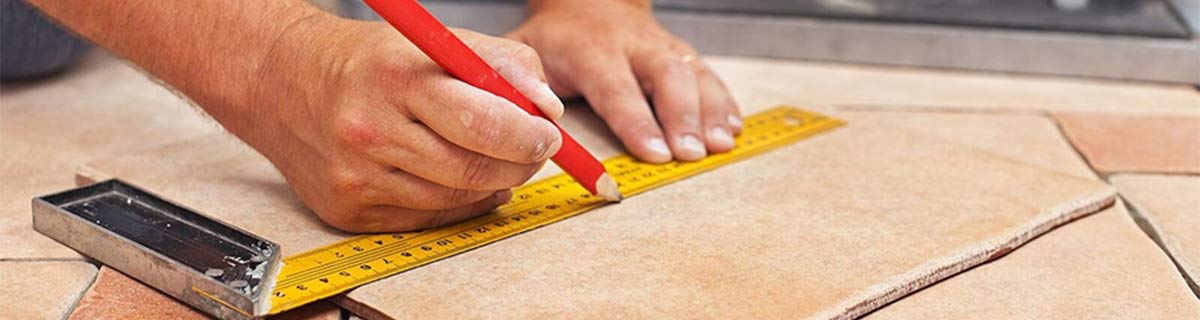
Installation begins along the longest straight side. Cement mortar (slurry) is used to install the paving slabs, which is placed between the slabs and the ground to bond them together and to provide the appropriate slopes. The cement mortar consists of concrete sand, cement, lime or lime substitute in liquid form, and water.

6. Cutting

As many paving slabs as necessary are laid and then cut to the correct sizes to fit the edges. Cutting can be done with a water cutter or a stone cutting wheel.

7. Waterproofing

Optionally, for extra durability, stain protection, and less maintenance, you can waterproof the sidewalk slabs with a suitable commercial waterproofing product, following the manufacturer’s instructions.

8. Stocking

If the slabs have been laid without grouting between them, it is not necessary to grout them. If you have laid them with grouting, mix marble dust with cement and dilute it with water so that it penetrates and fills the gaps in the joints.


High durability

Resistance to abrasion

Antiolisthirothta

Non-slip

Anthektikothta-stn-fwtia

Fire resistance

INDICATIVE PRICE LIST FOR THE INSTALLATION OF SIDEWALK SLABS

SURFACE AREA (sq. m.) PRICE (€)
0-20 sq. m. €200
20-40 sq. m. €350
40-60 sq. m. €500
60 sq.m. and above Request a quote

* Refers to the cost of installation on a flat surface, e.g., slab, cement, asphalt.

* Below are indicative market prices for paving slabs from selected suppliers.

TYPE-TYPE OF PLATE COST
40×40 cement slabs €1.54
Gray Slabs 6.90 €/m2
Plates Designs 40X40 7.14 €
Sidewalk slabs 50X50, 40X40 White 7.14 €
Sidewalk Slab Brick Gray 7.44 €/m2
Sidewalk Slab, Grey Cobblestone 7.44 €/m2
White Spider Sidewalk Tile 7.44 €/m2
Colored Plates 7.90 €/m2
Red Spider Sidewalk Tile 8.69 €/m2
Yellow Cobblestone Sidewalk Slab 8.69 €/m2
Pebble slabs 40 X 40 9.64 €
40×40 mosaic tiles €10.84
Sidewalk Slab Pebble Thin Gray 12.44 €/m2
Sidewalk Slab Pebble Brown 12.44 €/m2
Sidewalk Slab, Foldable, White 13.69 €/m2
Sidewalk Slab, Foldable, White/Green 13.69 €/m2

FREQUENTLY ASKED QUESTIONS QUESTIONS

Free use and access to sidewalks is a very important issue, because it is becoming increasingly difficult every day due to the indiscriminate use of sidewalk cafes, umbrellas, bus stops, columns, advertising signs, various product sales stands, and other obstacles. In addition, there are many complaints from citizens regarding the social responsibility of municipalities to repair sidewalks, and at the same time, there is confusion among citizens, who are unaware of basic information such as: Who is responsible for construction, maintenance, and repair? Who pays the costs? When is planting allowed? and others.

In this context, it should be noted that the legal framework governing sidewalks and the party responsible for their repair is defined by Ministerial Decision YPEN/DAOKA/66006/2360/2023 – Government Gazette 3985/B/22-6-2023 (Approval of Building Regulations) of the Minister of Environment and Energy, and in particular Article 23, as well as Articles 104, 105, and 106 of the Introductory Law to the Civil Code and Articles 288, 281, 200 of the General Principles of the Civil Code.

Who owns the sidewalks and what purpose do they serve?

Sidewalks are public spaces and are built, rebuilt, repaired, and maintained to ensure continuous, autonomous, safe, and unobstructed movement of pedestrians across their entire surface and their use by persons with disabilities and persons with reduced mobility, as permitted by the morphology of the terrain.

Who is responsible for repairs and maintenance?

The law distinguishes between the causes that created the liability. In cases where the cause of damage to the sidewalk is an event beyond the municipality’s sphere of responsibility, the adjacent property owner is responsible for repairing the sidewalk and other technical works that comprise it (kerb, gutter, substrate and surface or covering).

Who pays the cost in case of destruction?

In the event of destruction, disuse, and excavation by the State or the relevant Local Government Organization (LGO) of sidewalks that have been in existence for at least twenty years, as part of a general reconstruction or redevelopment of roads and squares to better meet the needs of the settlement, the cost of restoring, repairing, or reconstructing the sidewalks shall be borne by the adjacent owners.

However, if the damage to the sidewalk was caused by a previous dangerous action by other entities, e.g., the municipality through its competent bodies or other entities such as EYDAP, DEYAM, DEDDIE, Natural Gas, etc., which carried out work to repair damage to underground pipes beneath the sidewalks, then the responsibility for repair lies with the executing body (municipality or other bodies) as their intervention created a hazard and they are obliged to “repair” the damage they caused, unless the works were carried out exclusively for the benefit of the adjacent property, in which case the owner is solely liable.

It is generally accepted that the responsibility for the construction, reconstruction, and repair of sidewalks lies with the adjacent property owners. Therefore, if sidewalk slabs are broken due to external causes (weather conditions, third-party intervention such as parking on top of them and causing damage, transport works, wear and tear, tree roots, etc.), then the owner of the adjacent property is liable.

What happens when owners do not maintain their sidewalks?

In this case, the municipality undertakes the construction, reconstruction, or repair of the sidewalks and then certifies the expense to the municipal fund, either at the expense of the owners of the adjacent properties (depending on who they are) or the project contractors (DEDDIE, COSMOTE, etc.), provided that these have not yet been constructed or repaired or that the specifications applicable to their construction or repair have not been complied with.

What are the specifications for constructing sidewalks?

Sidewalks are constructed in accordance with specifications set out in a municipal regulatory decision. The decision specifies the dimensions, type of construction, and type of materials used for curbs, gutters, and their surfacing or covering. It also specifies the type of planting, the dimensions, and other details of the sections of sidewalks available for planting (e.g., flower beds).

In settlements that have been designated as traditional, the above decision is issued with the consent of the competent Architectural Council (SA).

Attention! The municipality is obliged to comply with the dimensions and enforce a Free Pedestrian Zone for continuous, safe, and unobstructed traffic in accordance with the provisions of Urban Planning Legislation. Any other installation (e.g., signage, planting, planters, etc.) must be placed outside the FREE ZONE. If the sidewalk is less than 1.50 meters wide, the pedestrian zone occupies the entire sidewalk.

In any case, the specifications set out in the provisions of the NOK for persons with disabilities and persons with reduced mobility, as well as the relevant decisions in force, in particular those under reference numbers YPEN/DMEAP/124964/ 1561/7.12.2022 (B’ 6213)..

Are steps on the sidewalk allowed?

It is not permitted to construct steps leading down to the building on sidewalks for the purpose of serving the building, but such steps must begin one (1) meter inside the street line or the building line in the case of a front garden that is a continuation of the sidewalk and is used by the public.

In any case, even old existing staircases or stair treads that contravene the provisions of the building regulations and are dangerous in terms of traffic are recorded as unauthorized. The risk is eliminated by applying the provisions on “dangerous buildings” by the competent Urban Planning Service.

Is it permissible to have a slope on sidewalks for parking lot entrances?

The longitudinal slope of sidewalks must not exceed 12%. To avoid greater slopes, steps with a maximum height of 0.15 m are constructed at appropriate locations across the entire width of the sidewalk.

What should we do in the event of temporary occupation of the sidewalk, e.g., with construction materials?

The owner or contractor must submit an application to the municipality’s Finance Department, where they will obtain a permit to occupy the sidewalk. Those responsible for the project are required to take all necessary measures to prevent accidents. A monthly fee is paid to the municipality for the occupation, based on zones and square meters.

What about tables, chairs, umbrellas, dividers, etc.?

A municipal regulatory decision determines the sidewalks on which health-related businesses are permitted to set up a specific number of tables and chairs.

In any case, there should be harmonious coexistence between residents and businesses, as well as ensuring safe passage for pedestrians and people with disabilities (PWD) with a minimum width of 1.50 meters.

No permanent structures are permitted in the shared space, such as pillars, floors, seats, planters, dividers between adjacent stores, etc.

CONTACT US