


With an Engineer’s Certificate, work that does not require a Building Permit or Small-Scale Works Approval can now be carried out, in accordance with the amendment to Article 30 of Law 4495/17 by Law 4759/20 (Government Gazette 245/A/9.12.2020).
However, in many areas such as the Cyclades, Pelion, the islands, and other protected areas, traditional settlements, and historical sites, special urban planning regulations apply, and therefore approval from the competent authorities is required before work can be carried out.
For this reason, citizens who wish to carry out minor repairs or renovations should be very careful and consult the relevant engineer to ensure that the work they undertake is entirely legal.
What types of work do not require a building permit or small-scale work approval and require an engineer’s certificate?
a) interior painting, minor repairs to doors and windows, or individual repairs for reasons of use and hygiene
b) minor internal repairs or alterations that do not alter the load-bearing structure of the building, as well as structures required for the movement or any form of service for persons with disabilities or persons with reduced mobility
c) exterior painting or replacement of railings or repair of coatings or repair of facades without the use of scaffolding
d) maintenance, repair, modification, or partial replacement of building installations and pipes
e) replacement of internal or external frames and glass panes in the same opening
f) maintenance and repair of roofs or attics without the use of scaffolding
g) minor terrain modifications up to ±0.80 m from the natural terrain
h) installation of air conditioners and wall-mounted gas boilers for heating and hot water production in existing buildings, installation of a series of wall-mounted gas boilers for heating
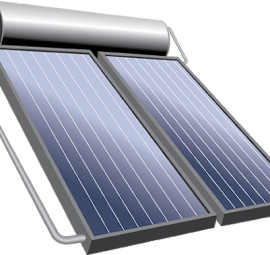
i) installation of solar water heaters
j) installation of passive solar systems or replacement of external window frames or installation or replacement of chimneys on the external facades of existing buildings, without the use of scaffolding, under the “Home Energy Saving” program, as well as work involving the installation of passive solar systems or the replacement of external window frames or the installation or replacement of chimneys on the external facades of existing buildings without the use of scaffolding
k) placing or installing equipment in buildings, such as cupboards, statues, fountains, shrines, benches, and tables, or temporary animal shelters with a surface area of up to three (3) square meters in uncovered areas of plots and fields
l) construction of fireplaces, ovens and fireplaces with their chimneys their in uncovered areas of plots or fields
m) construction of pergolas with or without temporary awnings covering an area of up to fifty (50) square meters, provided that this is not prohibited by specific provisions in force in the area
o) structures such as stairs, ramps, supports, and benches in uncovered areas of plots and fields
p) installation of temporary awnings, blinds, canopies, and tents
q) flooring of uncovered areas, provided that this does not exceed one third (1/3) of the uncovered area
r) land formation up to 0.80 m from the natural ground level
s) structures within plots of land or fields for the creation of entrance areas to plots and fields, up to two and a half (2.50) meters high, up to two and a half (2.50) meters wide, and up to one (1.00) meter deep.
t) structures for the installation of electricity meters
u) photovoltaic systems on buildings and for system power up to 100kW.
v) constructions of underground bases made of reinforced concrete for the foundation of electromechanical equipment
w) structures for the installation of infrastructure and charging devices for electric vehicles, without the need to install a new transformer in the internal electrical installation.
What exactly does this electronic certificate cover?
Before carrying out the above works, an electronic certificate must be drawn up by a competent engineer, issued by the information system of the Technical Chamber of Greece (TEE) stating that no approval from any authority is required for the above works in the area of the property.
What happens when approvals from other bodies are required?
In cases where approvals are required from other bodies or collective bodies (Architectural Council, Archaeological Service, Forestry Service, etc.), the file is updated with the above approvals. The engineer is responsible for completing the process of obtaining these approvals and for any studies that need to be prepared.
So, who are the bodies that need to give their opinion before any work is done?
The bodies that must give their opinion on a case-by-case basis are: the Architecture Council, the Archaeology Department, the Forestry Department, and others.
However, the issue mainly concerns the opinion of the Architectural Council on the following cases:
For any construction work on buildings, plots of land, or sites located in traditional parts of cities, traditional settlements, historical sites, archaeological sites, or areas of outstanding natural beauty.
For any construction work on buildings or sites that have already been declared or completed as listed buildings by decision of the competent Minister, as well as on buildings or land adjacent to or opposite them.
For works that differentiate the building from the morphological elements and typology imposed by specific provisions established per area, whether protected or not.
For any construction work less than 100 meters from the beachfront or facing major traffic arteries (Primary-Secondary-Tertiary National Road Network and Primary Provincial Road Network).
For all island areas under the jurisdiction of the Ministry of Shipping and Island Policy, the Architectural Councils, in addition to the above cases, are responsible for approving architectural studies for any construction work on properties, located outside settlement boundaries or in settlements with fewer than 2,000 inhabitants.
What should we pay attention to so that constructions are not arbitrary?
a) All work carried out must not affect the building’s structure or compromise its stability.
b) A Small-Scale Permit is required in the following cases:
When we do interior renovations or interior repairs or alterations
For exterior painting or replacement of railings or repair of coatings or repair of facades, which we do using scaffolding.
When we replace external frames and glass panes in different openings glass panes in different openings
For the maintenance and repair of roofs or attics using scaffolding.
A permit is required for ground formations above one meter from the natural ground level.
For the installation of thermal insulation, passive solar systems, or replacement of exterior window frames, or installation or replacement of chimneys on the exterior facades of existing buildings, using scaffolding, as part of the “Home Energy Saving” program, as well as for the installation of passive solar systems or the replacement of external window frames or the installation or replacement of chimneys on the exterior facades of existing buildings using scaffolding.
For the construction of pergolas with a surface area greater than fifty (50) sq.m., in uncovered areas, front gardens and terraces on the ground floor, as well as and on roofs and balconies regardless of size.
What about insurance contributions (IKA stamps) and waste management?
For all the construction work, whether it concerns work for which a permit is required the issuance of a license or permit of a small scale or not, will must be made inventory of construction works at the EFKA with the submission of the relevant table, with the inventory of all the tasks that are going to be done for the the payment of the corresponding contributions.
Furthermore, in the event of construction waste, a contract is concluded between the project owner and an alternative waste management company for excavation, construction, and demolition waste, based on the Waste Management Plan drawn up by the engineer. Upon completion of the work, the owner receives a Certificate of Acceptance from the company, which certifies the proper waste management process.